
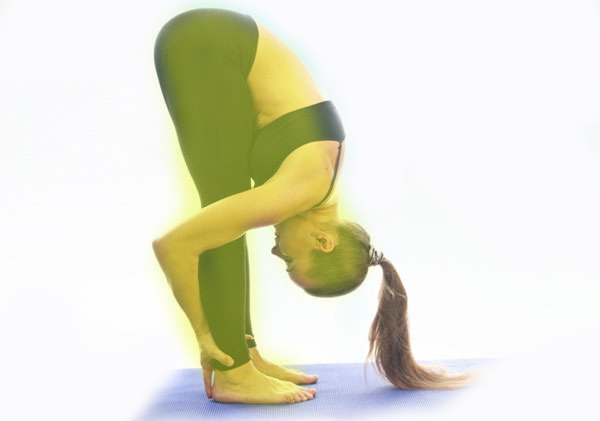
Uttanasana, or Standing Forward Bend, is a foundational standing fold. The Sanskrit name joins ut, suggesting intensity, with tan, meaning to stretch or extend. In practice, the pose is less about reaching the floor and more about folding from the hip creases while the feet and legs provide a steady base.
Bent knees, blocks and chair support are useful choices, not lesser versions. They help the spine lengthen and make it easier to control the transition between standing and folding.
Navigator
Prepare the Feet, Knees and Hips
Begin in a comfortable standing position with the feet together or hip-width apart. Notice the heel, base of the big toe and base of the little toe on each foot. A small bend in the knees allows the pelvis to move more freely.
- Practise a short half fold with the hands on a wall.
- Move between a small knee bend and straightening without locking the joints.
- Place two blocks in front of the feet before starting.
- Use a chair seat when reaching blocks causes the back to round strongly.
- Keep the gaze down so the neck follows the line of the spine.
Step-by-Step Uttanasana
- Stand steadily and inhale while lengthening through the crown of the head.
- Exhale, soften the knees and tip the pelvis forward from the hip creases.
- Bring the hands to blocks, a chair or the floor.
- Pause in a half lift with the spine long and the front of the chest broad.
- Fold only as far as the breath remains smooth and the weight stays balanced across the feet.
- Let the head release without pulling it toward the legs.
- Take several ordinary breaths and maintain a bend in the knees when helpful.
- To rise, place the hands on the hips, bend the knees and lengthen the spine forward.
- Press through the feet and return to standing with control.

Bent-Knee, Block and Chair Modifications
Keep the knees generously bent and rest the abdomen closer to the thighs when the back of the legs feels strongly limited. Blocks bring the floor upward; change their height until the shoulders can move away from the ears. A chair version is especially useful for learning the hip hinge.
For the chair variation, stand an arm’s length from the chair, fold forward and place the hands on the back or seat. Keep the torso closer to parallel with the floor. This is a complete half-fold practice and can be repeated slowly.
Spinal and Hamstring Alignment
The pelvis initiates the fold and the spine follows. Straight legs are optional. When straightening the knees causes the pelvis to roll backward and the back to round sharply, return to bent knees. Keep the thighs active without pushing the knees behind the ankles.
Distribute weight between the heels and the front of the feet. If the weight moves entirely into the heels, shift the hips slightly forward. If the toes grip, reduce the depth and rebuild the standing base.
Hand and Arm Options
- Rest the fingertips or palms on blocks.
- Hold opposite elbows and let the arms hang without swinging.
- Place the hands on the shins for a half lift.
- Use a chair when the shoulders rise toward the ears.
- Keep the hands on the hips during the entry and exit.
Common Mistakes
- Locking the knees to make the legs look straight.
- Pulling the torso down with the hands.
- Shifting all the weight into the heels.
- Trying to touch the floor before the hip hinge is clear.
- Lifting the head to look forward in the full fold.
- Rolling up quickly with the legs straight.
Practice Effects
Uttanasana teaches a standing hip hinge, balanced foot pressure and the difference between spinal length and forced depth. The half lift builds awareness that can support many other forward-folding asanas. Practising with props also helps learners choose a version they can repeat consistently.
Practice Limits
Come out when there is sharp discomfort, tingling, numbness, unsteady pressure in the head or loss of balance. Use a chair and keep the head above the heart when a full fold does not feel appropriate. Move slowly into and out of the posture, and seek guidance from a qualified yoga teacher for persistent difficulty with the setup.
Frequently Asked Questions
Must the knees be straight?
No. Bent knees often make the hip fold clearer and keep the spine easier.
Should the hands touch the floor?
No. Blocks, a chair or the shins can support the hands.
How should I return to standing?
Bend the knees, lengthen the spine, place the hands on the hips and rise with the legs.