
Siddhasana is a traditional seated yoga posture commonly translated as Accomplished Pose. In classical yoga, steady seated positions provide a base for breath observation, concentration and meditation. The modern practice should remain adjustable: the placement of the heels matters less than a balanced pelvis, an upright spine and a position that can be maintained without force.
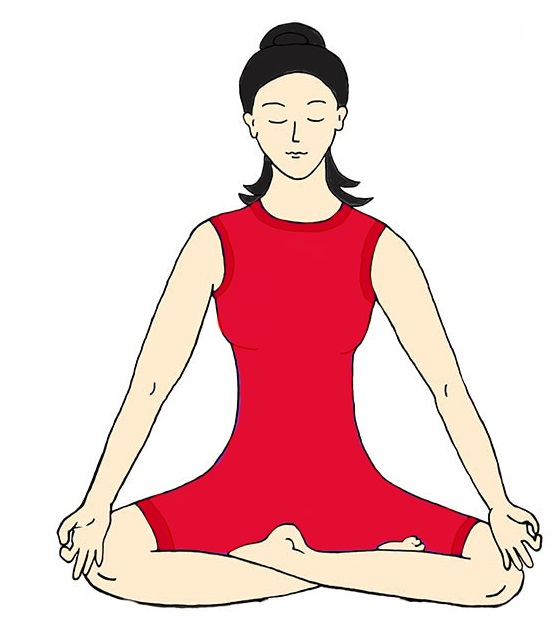
Siddhasana is often shown with one heel near the pelvic floor and the other in front of it. The feet do not need to be wedged tightly. A folded blanket, cushion or chair is an appropriate choice whenever the floor position makes the pelvis roll backward.

Navigator
Traditional Context and Practical Meaning
The name combines siddha, meaning accomplished or perfected, with asana, meaning seat or posture. The name describes the traditional importance of a stable seat; it does not mean that a practitioner must reproduce one exact leg arrangement. A simple cross-legged seat can serve the same learning purpose when it allows clearer attention.
Prepare the Hips, Knees and Ankles
- Sit on a folded blanket and extend both legs forward.
- Move the ankles gently and bend each knee separately.
- Keep additional support beside both outer thighs.
- Choose enough seat height for the pelvis to rest evenly.
- Begin with a shorter stay before using Siddhasana for longer seated practice.
Step-by-Step Siddhasana
- Sit with the legs extended and the hands beside the hips.
- Bend the left knee and draw the heel toward the centre without pulling.
- Bend the right knee and place the right foot in front of the left ankle or heel.
- Allow both knees to descend only as far as they naturally move.
- Rest the hands on the thighs, palms down or palms up.
- Balance the weight across both sitting bones.
- Lengthen the spine and let the shoulders rest over the pelvis.
- Keep the chin level and the back of the neck long.
- Observe five to ten natural breaths.
- Extend the legs slowly and repeat with the opposite leg in front.
Foot and Leg Placement
Do not press a heel into the body or trap the feet beneath the thighs. Leave enough space for the ankles and toes. The front heel may rest near the opposite ankle instead of stacking directly above it. Support a higher knee with a folded blanket so the leg does not hang without support.
Alternating the front leg keeps the practice balanced. If one arrangement feels distinctly clearer, begin with that side, then use a shorter stay on the second side.
Spine, Hands and Gaze
Rise through the crown of the head without lifting the ribs. Let the lower abdomen remain ungripped and the breath remain quiet. The hands may rest on the thighs or knees. Keep the eyes softly open with a level gaze, or close them when the seated base is already steady.
Cushion, Wall and Chair Modifications
- Higher seat: add folded blankets until both knees can rest at or below hip level.
- Thigh support: place a block or blanket beneath either outer thigh.
- Simple cross-legged option: keep both feet in front rather than drawing a heel inward.
- Wall reference: sit close to a wall and touch it lightly without leaning the full body back.
- Chair seat: place both feet on the floor and sit upright away from the backrest.
Using Siddhasana for Breath Awareness
Once the posture feels stable, notice the natural movement of the breath without changing its depth or pace. Siddhasana may be used before or after a simple yoga sequence. It is one possible seat for quiet observation, not a requirement for meditation practice.
Common Mistakes
- Forcing the heels into a textbook position.
- Sitting too low and rounding the lower back.
- Leaving a raised knee without support.
- Pressing the shoulders down while lifting the chest.
- Keeping the same leg in front every time.
- Staying after the feet or legs become numb.
Practice Limits and Teacher Guidance
Change the leg arrangement or use a chair for sharp discomfort, tingling, numbness or joint pressure. Uncross the legs slowly after a longer sit and pause before standing. A qualified yoga teacher can help distinguish a stable seated base from an unnecessarily compact one.
Frequently Asked Questions
Must the heels line up at the centre?
No. A looser arrangement is appropriate when it keeps the ankles, knees and pelvis comfortable.
Can beginners practise Siddhasana?
Yes, with suitable seat height and a short stay. A chair or simple cross-legged position is also valid.
Which leg should be in front?
Practise both arrangements. Begin with the clearer side and compare without forcing symmetry.
Thanks for this wonderful article about siddhasana. This is complete step by step in detail information. Big THANKS.
Om! we are glad that you liked our work. Your appreciation motivates us to do more better and hard work.
Keep connected with us.
OM! @Aditya, Nice to hear from you. I think you’re a new face to Yogic activities That’s why you feel back pain. But don’t worry. First of all, perform this sitting Asana as much as you can or as much as you are comfortable. If you having back pain during this then take the support of the wall or you can little bit twilt forward but not too much. Before performing this Pose practice Makrasana it gives relief in your back pain. Whenever you feel any pain or strain in any part which is unbearable then release the pose. One more thing keep your eyes closed and focus on your breathing.
Thanks,
Regards
Sarvyoga Team
Sir,thanks for the nice post. May I know the source (reference texts) for the benefits that you have listed here?
@Selvaraj, Thanks for your precious comment & we apologize for our late response.
We mention or write about the asana according to our experience, but if you really wanna know the reference then you can go with Patanjali Yoga Sutra, Gherand Samhita and Hatha yoga Pradipika these are the best books for knowledge. In our college time, these books are in our syllabus, so we personally recommend these books for you.
Thanks, May God bless you & keep connected with us.
sir body begain shaking after 15 minuts like snake in body if i chant mantra in this asan
Dinesh,
Thanks for your views.
Sometimes it happens, Chant the Mantra slowly and calmly & breathe slowly if you are uncomfortable in this Asana, then Practice Padmasana. Padmasana is best for meditation.
Thanks.
How would we know if we have mastered this asana? I can sit in this asana for 2 hrs.. I started with 5 min 2 years ago.
Some people say that siddhasan is not suitable for households.. siddhasan should be practiced by brahmacharis only..
Is it true.. please guide me..
@RAGHVENDRA,
First of all, thanks for landing here. Everybody can perform this Posture, if they haven’t any knee injury or knee pain.
Basically “Siddha” means accomplished/Complete. This Pose is best for meditation.
So, without any doubt and fear you can perform this Pose.
Thanks
Sarvyoga Team