
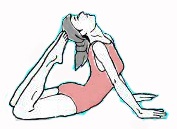
Purna Bhujangasana is presented in some yoga traditions as a deeper or more complete Cobra Pose. Unlike an ordinary low cobra, the advanced variation may include greater spinal extension, more knee flexion and an attempt to bring the feet toward the head.
This is not a beginner target. The useful aim is controlled extension distributed through the upper back and hips, not maximum depth in the lower back. Many practitioners should remain with a low or moderate Bhujangasana instead.
Navigator
Build a Comfortable Cobra Foundation First
- Lie on the abdomen with the legs extended and the tops of the feet resting on the mat.
- Place the palms beside the lower ribs rather than far in front of the shoulders.
- Keep the elbows bent and draw them gently toward the body.
- Inhale to lift the chest only as high as the back muscles can support without pushing strongly through the hands.
- Keep the front of the pelvis grounded and lengthen the tailbone toward the heels.
- Practise several easy breaths in this lower version before considering a deeper variation.
Preparation for the Advanced Variation
Before exploring Purna Bhujangasana, a practitioner should be able to perform a comfortable low cobra, maintain steady breathing in a moderate backbend and bend the knees without cramping or compressing the lower back.
- Warm the shoulders and upper back with gentle arm movements.
- Practise Sphinx Pose or a low cobra to organise the spine.
- Use prone quadriceps stretches without pulling the feet forcefully.
- Prepare the front body with a supported bridge or low lunge.
- Work with an experienced teacher who can observe where the movement is occurring.
Teacher-Led Purna Bhujangasana Steps
- Begin prone with the legs comfortably separated and the hands beside the lower ribs.
- Inhale into a moderate cobra, keeping the elbows soft and the shoulders away from the ears.
- Pause and confirm that the breath remains smooth and the lower back feels spacious.
- Bend both knees only as far as comfortable, keeping the knees no wider than needed.
- Lift through the breastbone rather than throwing the head backward.
- Allow the feet to move toward the head only if the movement remains controlled and pain-free.
- Stay for one or two calm breaths rather than holding a maximum shape.
- Lower the feet, soften the elbows and return the chest to the mat slowly.
- Rest with the head turned to one side or in a comfortable prone position.
Safer Cobra and Backbend Options
- Keep both legs straight and practise a low cobra.
- Use Sphinx Pose with the forearms on the floor.
- Lift the chest without bending the knees.
- Bend one knee at a time while keeping the chest low.
- Place a folded blanket beneath the lower ribs for gentle support.
- Choose Setu Bandhasana when prone backbending is not comfortable.
Breathing and Alignment
- Inhale to lengthen the front of the spine and broaden the collarbones.
- Exhale while keeping the abdomen gently supportive rather than collapsing into the lower back.
- Press the tops of the feet down before bending the knees.
- Keep the shoulders moving away from the ears.
- Let the gaze remain forward or slightly upward; neck extension is optional.
- Distribute the backbend through the thoracic spine and hips rather than one compressed point.
Common Mistakes
- Straightening the elbows aggressively to force height.
- Throwing the head back before the chest has lifted.
- Bringing the feet toward the head by compressing the lower back.
- Holding the breath while chasing a deeper shape.
- Letting the shoulders crowd the neck.
- Practising the full variation without adequate preparation or observation.
Possible Practice Benefits
A carefully scaled cobra practice may develop awareness of spinal extension, upper-back engagement, shoulder positioning and coordinated breathing. These are practice possibilities rather than guaranteed therapeutic outcomes.
Keep this article focused on preparation, spinal extension, coordinated breathing and comfortable practice limits rather than health outcomes.
Precautions and When to Avoid
- Avoid the advanced variation with current back, neck, shoulder, wrist, hip or knee pain.
- Do not practise a forceful backbend after recent abdominal or spinal surgery.
- Pregnant practitioners should avoid prone pressure and use individually appropriate alternatives.
- People with dizziness, uncontrolled blood pressure concerns or reduced balance should seek individual guidance.
- Stop immediately for sharp pain, numbness, tingling, headache or unusual shortness of breath.
Frequently Asked Questions
Must the feet touch the head?
No. Contact between the feet and head is not required. The advanced pose is optional, and a lower cobra may be the more appropriate practice.
Should the elbows be straight?
Not necessarily. Keeping the elbows bent can help distribute the movement and prevent the shoulders from rising toward the ears.
Is Purna Bhujangasana suitable for beginners?
No. Beginners should first learn a comfortable low cobra and develop backbend awareness with qualified instruction.
Related SarvYoga Guides
Safety Reference
Practise yoga within a comfortable range and seek qualified guidance for advanced movements, persistent pain, recent injury or circumstances requiring individual modification.