
Yoga teacher development continues after an initial training course. Personal practice, observation, communication and regular study help a teacher become clearer and more adaptable.
Navigator
Maintain personal practice
Teach from direct experience rather than memorised instructions alone. A consistent personal practice helps the teacher understand pacing, props and transitions.
Observe students carefully
Look at balance, breathing, support and movement quality. Avoid assuming that every student should use the same range.
Improve communication
- Use simple instructions.
- Give one main action at a time.
- Explain prop options clearly.
- Leave enough silence for students to practise.
- Avoid exaggerated promises.
Develop sequencing skills
Build classes around a clear purpose. Move from preparation to main poses and finish with appropriate quiet work.
Study ethics
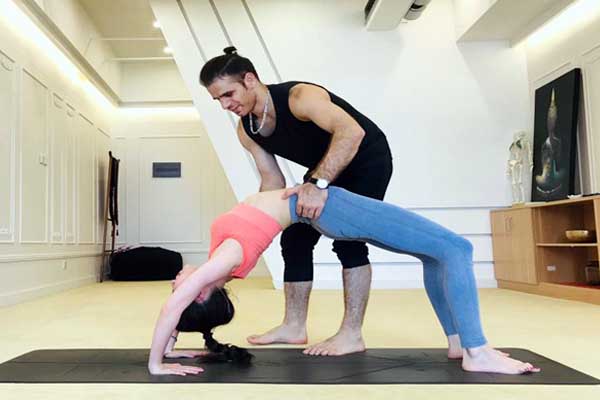
Respect boundaries, ask permission before hands-on guidance and stay within the teacher’s actual training.
Continue learning
Use mentorship, observation, workshops and focused study. Advanced pranayama, hands-on adjustment and specialised groups require further supervised education.
Common mistakes
- Teaching too many ideas at once.
- Using one sequence for every group.
- Ignoring props and modifications.
- Stopping personal practice after training.
Practice limits
A yoga teacher should teach within the scope of actual study and experience. Refer students to a more suitably trained yoga teacher when a class requires specialised knowledge.