
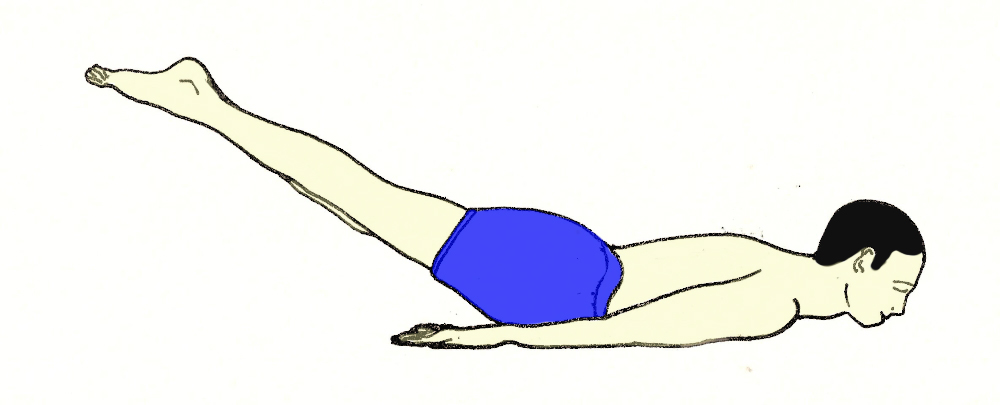
Shalabhasana, or Locust Pose, is a prone back-body practice. The Sanskrit word shalabha refers to a locust or grasshopper. The pose develops from pressing the front of the pelvis and abdomen into the mat while the legs, chest or both lift with control.
There is no single required height. A low lift can teach more precise leg and upper-back action than a high shape made with momentum. Practitioners can begin with one limb at a time and combine the movements only when the base remains stable.
Navigator
Preparation
- Lie on the abdomen with the forehead on stacked hands.
- Lengthen one leg back at a time without lifting it.
- Practise a small prone chest lift with the hands beside the ribs.
- Roll the shoulders away from the floor and keep the neck long.
- Place a folded blanket beneath the pelvis if that gives a clearer base.
A few rounds of Bhujangasana with a low chest lift can prepare the upper back. Keep the preparatory movements unhurried.
Single-Leg Shalabhasana
- Lie on the abdomen with the legs hip-width apart.
- Place the arms alongside the body or stack the hands beneath the forehead.
- Press the front of the left leg and pelvis into the mat.
- Lengthen the right leg backward and lift it a small distance without bending the knee.
- Keep both front hip points directed toward the mat.
- Take two or three ordinary breaths, then lower slowly.
- Repeat with the left leg.
Full Locust Pose Steps
- Return to the prone starting position with the legs active.
- Extend the arms back with the palms facing inward, or interlace the hands behind the pelvis if that is comfortable.
- On an inhalation, lengthen the chest forward and the legs backward.
- Lift the chest, arms and legs only as high as the movement stays evenly distributed.
- Keep the back of the neck long and the gaze slightly ahead on the floor.
- Draw the inner legs toward each other without forcing the feet to touch.
- Maintain ordinary breathing for a short stay.
- Lower with control and rest the head on the hands.
Opposite Arm and Leg Variation
Extend the right arm forward and the left leg back. Lift both a small distance, keeping the pelvis quiet. Lower and repeat with the left arm and right leg. This diagonal version helps the practitioner study length and coordination without lifting the entire body at once.
Arm Positions
- Arms alongside the body: keeps the shoulder action simple.
- Hands beside the ribs: allows light support without turning the pose into a strong push.
- Arms forward: increases the lever and should be used with a smaller lift.
- Hands interlaced behind: adds shoulder extension while the chest moves forward.
- Hands stacked beneath the forehead: works well for single-leg practice.
Alignment Points
- Reach the legs back before lifting them.
- Keep the front of the pelvis evenly grounded.
- Spread the curve through the upper and middle back.
- Lift the breastbone forward rather than only upward.
- Keep the shoulders away from the ears.
- Use ordinary breathing throughout the hold.
Common Mistakes
- Throwing the legs upward with momentum.
- Bending the knees and separating the legs widely.
- Compressing the back of the neck by looking too far forward.
- Holding the breath while trying to lift higher.
- Pressing the chin into the floor.
- Repeating the pose after the movement has become uneven.
Practice Effects
Shalabhasana teaches active extension through the legs and upper back while the practitioner remains close to the floor. The single-leg and diagonal versions also develop awareness of left-right differences. Use these effects as learning observations, not as promised results.
Practice Limits
Lower the body if there is sharp discomfort, pinching, unstable pressure or difficulty keeping the breath smooth. Practise a smaller lift or one limb at a time when the full pose is not steady. Strong two-leg lifts, long holds and advanced arm positions are best learned with a qualified yoga teacher.
Frequently Asked Questions
How high should the legs lift?
Only as high as the knees remain organised, the pelvis stays steady and the breath continues naturally.
Can the legs be slightly apart?
Yes. Hip-width spacing can make the position more stable.
What can I practise next?
Dhanurasana uses a related prone back-body action but adds bent knees and an ankle or strap hold.