
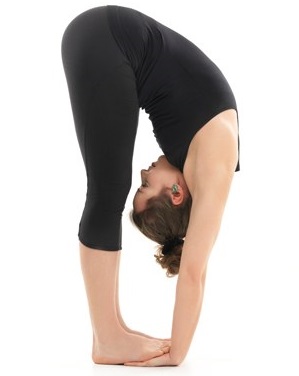
Padahastasana, often translated as Hand Under Foot Pose, is a standing forward fold in which the hands slide beneath the feet. The name combines pada, meaning foot, hasta, meaning hand, and asana, meaning posture.
The hand-under-foot position is optional. Practitioners can learn the main actions with bent knees and the hands on blocks, shins or the floor. The fold should come from the hip joints while the spine lengthens forward, not from pulling the head toward the knees.
Navigator
Preparation
Begin with Tadasana and several gentle half folds. Place two blocks in front of the feet so the hands have a reliable support.
- Stand with the feet parallel and approximately hip-width apart.
- Bend and straighten the knees a few times.
- Practise hinging forward with the hands on the thighs.
- Lengthen the front of the torso before folding more deeply.
- Keep the weight shared between the heels and the fronts of the feet.
Foundation: Standing Forward Fold
- Stand in Tadasana with the arms alongside the body.
- Inhale and lift the arms or place the hands at the hips.
- Exhale and hinge forward from the hip joints.
- Bend the knees enough for the abdomen to approach the thighs.
- Place the hands on blocks, shins or the floor.
- On an inhalation, lengthen the spine into a half lift.
- On an exhalation, fold only as far as the back remains broad and the breath stays natural.

Padahastasana Steps
- From a comfortable forward fold, bend the knees more deeply.
- Turn both palms upward and slide the hands beneath the feet from the toe side.
- Position the toes close to the wrist creases only if the wrists remain comfortable.
- Spread the toes and keep the palms flat enough to avoid concentrated pressure.
- Inhale and lengthen the spine forward.
- Exhale and fold while maintaining the length created on the inhalation.
- Keep the elbows softly bent and directed out to the sides.
- Stay for a few ordinary breaths without pulling against the feet.
- Bend the knees, slide the hands out and place them on blocks.
- Bring the hands to the hips and rise with a long spine, or roll up slowly if that method is part of your practice.
Hand-Placement Options
- Hands on blocks: offers the most adjustable height.
- Hands on shins: supports a half lift and clearer spinal length.
- Fingertips on the floor: keeps the wrists neutral.
- Hands beneath the front of the feet: introduces the classical Padahastasana relationship.
- Hands beneath the heels: is a different strong variation and need not be added.
Knee and Spine Alignment
Straight knees are not a requirement. A small or generous bend can allow the pelvis to tip forward more freely. Lengthen the torso toward the floor before attempting to straighten the legs. Keep the back of the neck in line with the rest of the spine rather than lifting the chin.
Common Mistakes
- Locking the knees and losing movement at the hips.
- Pulling the torso downward with the arms.
- Shifting all body weight into the heels.
- Trying to touch the forehead to the knees.
- Holding the breath in the final position.
- Rising quickly and losing balance.
Place in Surya Namaskar
A standing forward fold appears in many Surya Namaskar sequences, often near the beginning and again before returning to standing. The hand-under-foot variation is not normally required within a flowing round. Use a simple fold such as Uttanasana when moving with the breath.
Practice Effects
Padahastasana provides a structured way to study a standing hip hinge, the balance of the feet and the relationship between bent knees and spinal length. It also gives the hands a clear grounding action beneath the feet. These are practice observations rather than promised outcomes.
Practice Limits
Use blocks or leave the hand-under-foot position if there is sharp discomfort, tingling, numbness, wrist compression, unsteady balance or loss of smooth breathing. Do not force the knees straight or pull the torso downward. A qualified yoga teacher can help select an appropriate hand height and knee position.
Frequently Asked Questions
Do the knees need to be straight?
No. Bend them enough to keep the fold spacious and controlled.
Must the hands go beneath the feet?
No. Blocks, shins or the floor are useful complete variations.
How should I come up?
Release the hands first, bend the knees and rise using a slow method that keeps balance steady.