
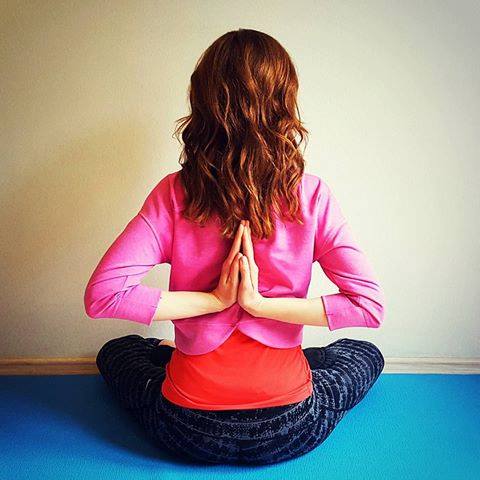
Viparita Namaskarasana, commonly called Reverse Prayer Pose, places the hands behind the back with the palms moving toward one another. It is primarily a shoulder, chest, forearm and wrist position rather than a complete standalone sequence.
Many people cannot place the palms together behind the spine without strain. Keeping the hands apart, holding opposite elbows or using a strap are valid versions.
Navigator
Prepare the Shoulders and Wrists
- Roll the shoulders slowly in both directions.
- Interlace the fingers behind the back with the arms relaxed.
- Practise holding opposite elbows behind the torso.
- Move the wrists gently through flexion and extension without forcing.
- Keep the ribs neutral rather than pushing the chest forward aggressively.
Step-by-Step Reverse Prayer Pose
- Stand or sit with the spine comfortably upright.
- Bring both arms behind the body.
- Begin with the backs of the hands against the lower back and the fingers pointing downward.
- Slide the hands upward only as far as the shoulders and wrists remain comfortable.
- Turn the fingers gradually toward one another and, if available, upward.
- Bring the palms closer without forcing them to touch.
- Draw the elbows gently backward while keeping the lower ribs organised.
- Take two or three easy breaths.
- Release the hands downward slowly and shake out the wrists.
Gentler Hand Positions
- Hold the opposite elbows behind the back.
- Clasp the opposite forearms.
- Interlace the fingers and keep the hands low.
- Hold a strap behind the back with the hands comfortably separated.
- Place the backs of the hands on the waist instead of joining the palms.
- Practise one arm at a time when the shoulders differ significantly.
Shoulder and Rib Alignment
- Lift through the crown of the head without arching the lower back.
- Keep the front ribs from flaring forward.
- Allow the shoulder blades to move toward one another gently.
- Keep the neck relaxed and the chin level.
- Reduce the hand position if the elbows pull sharply inward.
- Maintain an even breath rather than using tension to increase the range.
Common Mistakes
- Forcing the palms together despite wrist or shoulder pain.
- Sliding the hands too high and compressing the shoulder joints.
- Arching the lower back to imitate a larger chest opening.
- Holding the breath while squeezing the elbows backward.
- Ignoring numbness or tingling in the hands.
- Releasing the arms suddenly after a strong stretch.
Use Within Other Yoga Poses
Reverse Prayer arms sometimes appear in standing poses or forward folds. First learn the arm position while sitting or standing neutrally. Adding a leg balance, twist or fold changes the demand and should be introduced gradually.
The hand position is optional. A practitioner can perform the surrounding pose with hands on the hips, in ordinary prayer or holding a strap.
Possible Practice Benefits
A comfortable version may develop awareness of shoulder extension, forearm rotation, upright posture and breathing across the front of the chest. These are practice possibilities rather than guaranteed therapeutic effects.
Keep the pose focused on shoulder mobility, arm positioning and a comfortable opening across the front of the chest.
Precautions and When to Modify
- Use a strap or elbow hold with current wrist, elbow or shoulder sensitivity.
- Avoid forceful hand placement after recent shoulder, chest, wrist or hand surgery.
- People with reduced sensation or joint instability need individual guidance.
- Pregnant practitioners can use a wider, lower arm position that does not disturb breathing or balance.
- Stop for sharp pain, numbness, tingling, weakness or colour change in the hands.
Frequently Asked Questions
Must the palms touch?
No. The palms may remain apart, and the hands can stay low. Comfort and steady breathing are more important than the final hand shape.
Why do my wrists feel compressed?
The position requires substantial wrist extension and forearm rotation. Use a strap, interlaced fingers or an elbow hold instead.
Can Reverse Prayer be practised while seated?
Yes. A stable seated position can make it easier to focus on the shoulders and hands without balancing demands.
Related SarvYoga Guides
Safety Reference
Practise yoga within a comfortable range and seek qualified guidance for advanced movements, persistent pain, recent injury or circumstances requiring individual modification.