
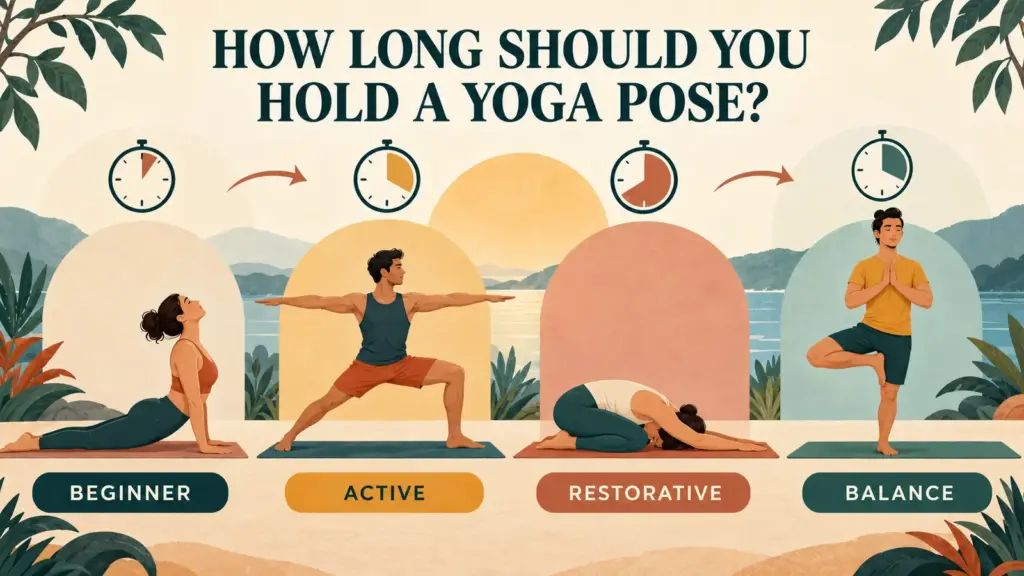
A useful hold is measured by the quality of breath, alignment and attention—not by endurance alone. Dynamic sequences may use a single breath, while steady standing poses, balances and supported restorative shapes follow different rhythms. This guide presents the subject as yoga education rather than diagnosis or treatment. Adapt the practice to your experience, and ask a qualified yoga teacher when the method is unfamiliar or difficult to assess.
Navigator
Understanding the practice
A useful hold is measured by the quality of breath, alignment and attention—not by endurance alone. Dynamic sequences may use a single breath, while steady standing poses, balances and supported restorative shapes follow different rhythms.
Traditional yoga terms can carry meanings that are broader than a brief English translation. For that reason, it helps to distinguish the name of a practice from the exact method being used. Posture, breathing pattern, duration, attention and the practitioner’s current capacity all matter.
A clear way to begin
- Begin with three to five natural breaths in a familiar steady pose.
- Notice whether the jaw, face and breathing remain relaxed.
- Leave the pose before alignment becomes unstable or breath becomes strained.
- Rest briefly and observe the effect before repeating.
Move slowly enough to notice what changes. Natural breathing, a stable base and an exit that remains under control are more informative than reaching a dramatic shape or count. A shorter practice that can be repeated with attention is usually a better foundation than one that depends on force.
Key points to remember
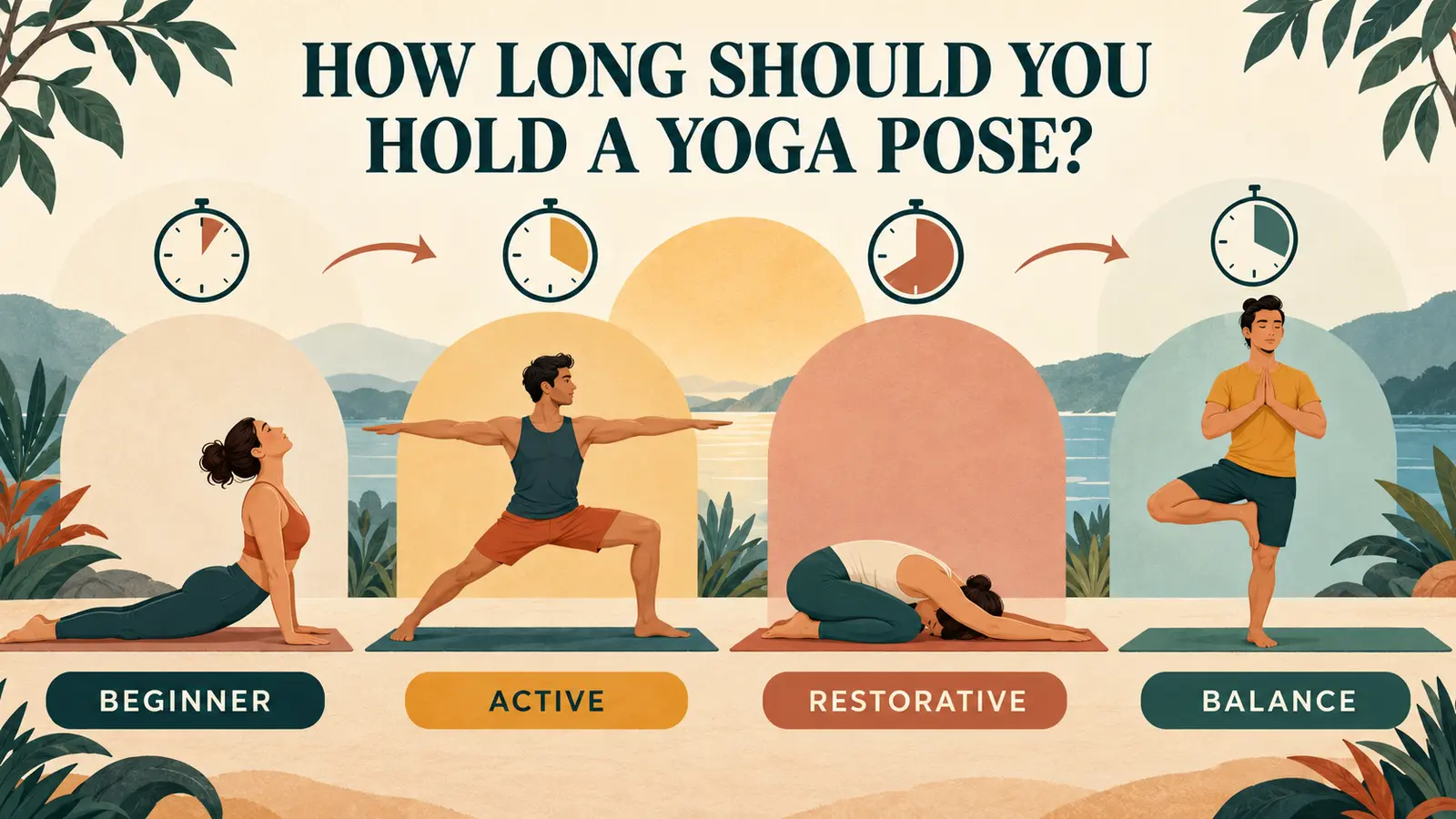
- Dynamic movement: often one breath per position.
- Steady foundational poses: several comfortable breaths.
- Balance poses: shorter, repeatable attempts usually teach more than one forced hold.
- Restorative poses: longer stays require reliable support and an easy exit.
These points are guides, not rigid rules. Yoga traditions differ in language and teaching sequence, and individual bodies respond differently. Keep the method simple until its purpose and effects are clear.
Common mistakes
- Using a stopwatch while ignoring breath quality
- Copying another person's duration
- Treating shaking, pinching or numbness as progress
If the breath becomes strained, the face hardens or the movement loses control, reduce the range, add support or stop. Sharp pain, numbness, dizziness and unusual breathlessness are reasons to leave the practice rather than push through it.
How to include it in a balanced routine
Place the practice where it supports the overall arc of the session. Begin by arriving and observing the breath, progress from simpler to more demanding actions, and leave time to reduce effort before the final rest. Avoid adding several unfamiliar techniques at once; that makes it difficult to understand what helped and what created strain.
Keep brief notes after practice: what you did, how long it lasted, whether breathing remained comfortable and what you would change next time. This turns experience into practical guidance without making exaggerated conclusions from a single session.
Frequently asked questions
Should beginners count seconds or breaths?
Breaths are usually simpler because they keep attention on ease and rhythm.
Does a longer hold make a pose better?
No. Duration is useful only while the pose remains steady, comfortable and appropriate.
When should I leave immediately?
Come out for sharp pain, numbness, dizziness, breathlessness or loss of control.
Continue learning on SarvYoga
SarvYoga takeaway
A useful hold is measured by the quality of breath, alignment and attention—not by endurance alone. Dynamic sequences may use a single breath, while steady standing poses, balances and supported restorative shapes follow different rhythms. Practise with patience, context and clear limits. Consistency is most useful when it preserves curiosity and good judgement.