
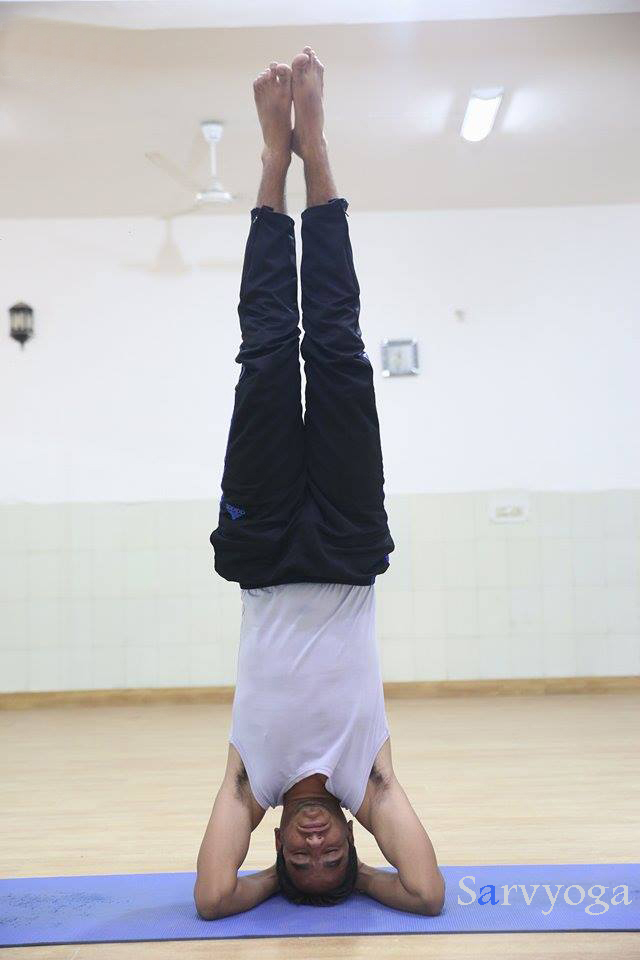
Shirshasana, also written as Sirsasana, is a supported headstand in which the body is inverted while the forearms help create the base. It is an advanced balance and weight-bearing posture, not a beginner exercise.
Do not learn headstand from written instructions alone. Practise with a qualified yoga teacher who can assess your shoulder, upper-back and neck control and help you leave the pose safely. A wall is not a substitute for supervision.
Navigator
What Type of Headstand Is Described Here?
This guide discusses a supported forearm headstand, often called Salamba Sirsasana. The crown of the head makes light contact with the mat, while the forearms and shoulders should carry and control much of the load. Different yoga traditions teach the base and progression differently.
Preparation Before Shirshasana
- Develop steady forearm and shoulder support first.
- Practise comfortable Dolphin Pose and controlled plank variations.
- Learn how to keep the neck long rather than collapsing onto the head.
- Make sure you can enter and leave a tucked inversion without kicking.
- Use a clear, non-slip area with direct teacher supervision.
Supported Shirshasana Progression
- Kneel and place the forearms on the mat. Set the elbows approximately shoulder-width apart.
- Interlace the fingers to make a stable hand support. Place the crown of the head lightly on the mat, with the back of the head close to the hands.
- Press the forearms firmly down and lift the shoulders away from the ears. Avoid dropping body weight into the neck.
- Lift the knees and walk the feet closer only while the spine and neck remain controlled.
- With a teacher assisting, bring the knees toward the chest in a compact tuck. Do not jump or kick upward.
- Only after the tucked position is stable, gradually extend the hips and legs. Keep breathing normally.
- Stay for a brief, comfortable period chosen with your teacher. Duration is not a measure of quality.
- To come down, bend the knees into the tuck and lower both feet slowly. Rest in a comfortable kneeling or seated position.
Essential Alignment Points
- Keep strong pressure through the forearms.
- Maintain space through the shoulders and neck.
- Use a controlled tuck instead of momentum.
- Keep the ribs and pelvis organised rather than arching the lower back.
- Breathe normally and leave the pose before fatigue changes the alignment.
Common Mistakes
- Attempting the pose without in-person instruction.
- Kicking both legs upward.
- Placing most of the body weight on the head or neck.
- Holding the breath.
- Using a wall while repeatedly falling or collapsing into it.
- Staying inverted after the shoulders or arms begin to fatigue.
Possible Practice Benefits
A carefully supervised headstand practice may develop balance, spatial awareness and strength through the shoulders, arms and trunk. These are exercise-related possibilities, not guaranteed medical outcomes.
Claims that headstand reverses ageing, raises haemoglobin, treats endocrine disorders, improves eyesight or prevents hair loss are not established reasons to practise this pose.
Precautions and When to Avoid Headstand
Because headstand is a demanding inversion, obtain personalised guidance before attempting it. Avoid it when a healthcare professional or qualified teacher advises against inversion or weight-bearing through the head, neck or shoulders.
- Do not practise with a current neck, head, shoulder, upper-back or spinal injury.
- Seek medical advice first if you have glaucoma or another eye-pressure problem, uncontrolled blood pressure, cardiovascular or vascular disease, osteoporosis, recurrent vertigo, severe headache, neurological symptoms or recent surgery.
- Pregnant practitioners should not begin headstand during pregnancy. Experienced practitioners need individual professional guidance.
- Stop immediately for neck pressure, sharp pain, dizziness, visual disturbance, numbness, nausea or unusual shortness of breath.
Frequently Asked Questions
Is Shirshasana suitable for beginners?
No. It requires preparation and direct supervision. Beginners should first develop shoulder, forearm and trunk control in safer preparatory exercises.
Should I practise headstand for 15 or 30 minutes?
No general duration is appropriate. Long holds increase fatigue and risk. Use only a brief duration selected with a qualified teacher.
Can headstand prevent hair loss or improve eyesight?
Those claims should not be treated as established benefits. Seek appropriate professional care for hair or eye concerns.
Can I practise against a wall?
A wall may be used as part of a teacher-led progression, but it does not correct unsafe loading or replace a teacher.
Related SarvYoga Guides
- Yoga Poses Library
- Balasana (Child???s Pose)
- Ardha Pincha Mayurasana (Dolphin Pose)
- Yoga for Beginners
Safety Reference
The National Center for Complementary and Integrative Health advises learning yoga with qualified guidance and notes that pregnancy, older age, existing injuries and health conditions may require modifications. See its Yoga: Effectiveness and Safety guidance.