
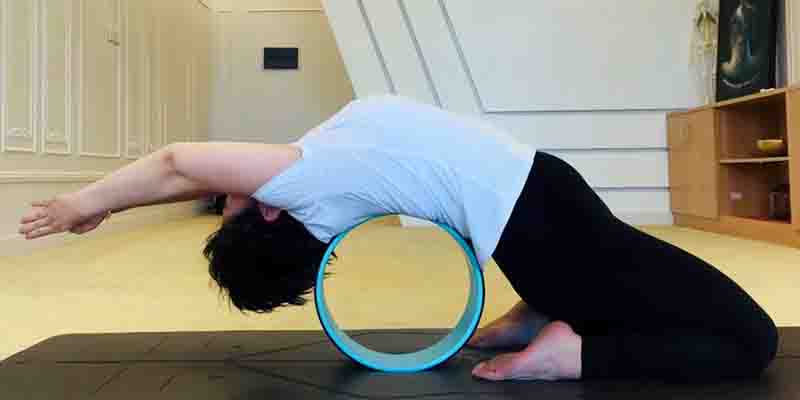
A back-aware yoga practice focuses on support, pacing and clear movement. The aim is not to force a large stretch. Small, controlled actions can make it easier to notice how the pelvis, ribs, shoulders and spine work together.
Navigator
Start with a supported position
Sit on a chair with both feet on the floor. Lengthen the spine without lifting the ribs. Rest the hands on the thighs and take several natural breaths.
Gentle sequence
Pelvic movement
Rock the pelvis slightly forward and backward while seated. Keep the movement small and avoid forcing the lower back.
Seated side bend
Raise one arm and lean gently to the opposite side. Keep both sitting bones supported.
Wall-supported hinge
Place the hands on a wall and step back. Bend the knees and lengthen the spine. Keep the shoulders away from the ears.
Tabletop movement
Come onto hands and knees, or place the hands on a chair. Move slowly between a rounded and lengthened spine.
Supported rest
Lie down with the lower legs on a chair. Place a folded blanket beneath the head and let the breath settle.
Useful modifications
- Complete the entire sequence from a chair.
- Use blocks beneath the hands.
- Keep the knees bent during forward movement.
- Reduce the range of twisting and bending.
- Pause before changing position.
Common mistakes
- Pulling into a deep forward fold.
- Moving quickly between floor and standing positions.
- Holding the breath during effort.
- Using strong twisting to create a larger range.
Practice limits
Keep every movement steady and comfortable. Stop when a position causes sharp discomfort, tingling, dizziness or loss of control. Learn unfamiliar backbends, binds and inversions from a qualified yoga teacher.