
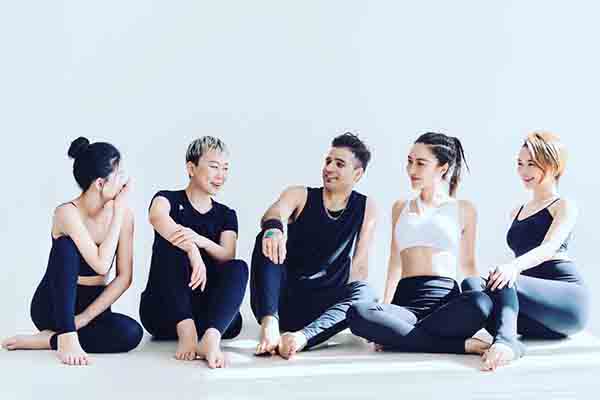
Hasya Asana, often described as Laughter Yoga, combines playful laughter exercises with relaxed breathing, eye contact and simple movement. The laughter may begin voluntarily rather than from humour.
This is a group yoga activity centred on relaxed breathing, eye contact and simple movement rather than promised health outcomes. A comfortable session should leave breathing and facial muscles relaxed rather than strained.
Navigator
Prepare for a Comfortable Session
- Choose a well-ventilated space.
- Stand, sit on a chair or use another stable position.
- Keep water available.
- Remove pressure to laugh loudly or continuously.
- Allow quiet smiling or gentle exhalation as valid alternatives.
A Simple Laughter Yoga Practice
- Begin with two or three natural breaths.
- Relax the jaw, shoulders and abdomen.
- Bring the palms together and clap gently in an easy rhythm.
- Smile or make a soft “ha” sound on the exhalation.
- Use brief periods of playful laughter rather than one long forced effort.
- Pause between rounds and return to normal breathing.
- Finish with quiet sitting or standing for one minute.
Seated and Low-Intensity Options
- Practise seated when standing balance is limited.
- Use silent smiling instead of vocal laughter.
- Keep one hand on the abdomen to notice relaxed breathing.
- Shorten each round to a few seconds.
- Skip clapping when the hands, wrists or shoulders are sensitive.
- Leave the group temporarily when overstimulated.
Common Mistakes
- Holding the breath while trying to laugh.
- Forcing volume, facial expression or duration.
- Continuing through dizziness, coughing or chest discomfort.
- Using laughter to suppress difficult emotions.
- Pressuring another participant to join.
- Presenting the activity as medical care.
Possible Practice Effects
Some people experience playfulness, social connection or temporary relaxation during a comfortable session. Responses vary, and no emotional or physical result is guaranteed.
Precautions and When to Stop
- Use a seated, quieter version after recent illness or when stamina is limited.
- Recent abdominal, chest or eye surgery is outside the scope of this general guide; avoid strong abdominal effort and seek individualized professional guidance before returning to demanding practice.
- Stop for chest pain, faintness, uncontrolled coughing, severe breathlessness or panic.
- People with significant heart, lung or mental-health concerns should discuss vigorous group practice with an appropriate professional.
- Do not replace prescribed care with laughter exercises.
Frequently Asked Questions
Does laughter need to feel genuine?
No. The exercise may begin voluntarily, but it should still remain comfortable and respectful.
Can I practise silently?
Yes. Smiling, gentle exhalation and quiet facial movement are valid low-intensity options.
How long should a beginner practise?
Begin with a few short rounds separated by normal breathing rather than a long continuous session.
Related SarvYoga Guides
Practice Summary
Use a comfortable range and stop for sharp pain, numbness, tingling, dizziness, faintness or unusual breathlessness. Seek qualified instruction when symptoms persist or individual adaptation is needed.