
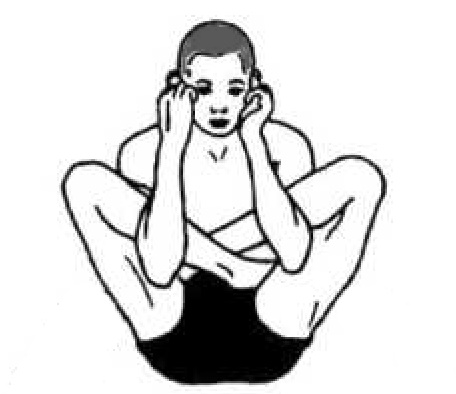
Garbhasana, often translated as Fetus Pose or Embryo Pose, is an advanced seated balance commonly built from Padmasana. The arms are threaded between the thighs and calves before the practitioner balances upright. The exact hand position and final shape can vary by yoga tradition.
This is not a beginner pose. It combines deep hip rotation, lotus-leg positioning, shoulder movement, arm threading and balance. Do not force the knees, ankles or arms into the shape from written instructions alone.
Navigator
Garbhasana Is an Advanced Lotus-Based Balance
A safe attempt begins with a comfortable, unforced lotus position. If Padmasana causes knee, ankle or hip discomfort, Garbhasana is not an appropriate next step. Use an easier seated posture instead.
Prerequisites Before Arm Threading
- Comfortable seated posture with the spine upright and no knee pain.
- Padmasana that can be entered and released without pulling the feet or twisting the knees.
- Enough space between each thigh and calf for the arm to pass without force.
- Comfortable shoulder and elbow movement.
- Ability to balance on the sitting bones without rounding sharply through the lower back.
- Direct supervision from a qualified teacher familiar with lotus-based practices.
Teacher-Led Garbhasana Steps
- Sit on a folded mat and establish Padmasana only if it is already comfortable.
- Place the hands beside the hips and lengthen the spine.
- Lean back slightly under teacher supervision and create space between one thigh and calf.
- Turn the palm upward and gently slide the forearm through the available space. Never push against the knee joint.
- Repeat on the other side only if the first arm passes without strain.
- Bend the elbows and bring the hands toward the face or ears according to the method being taught.
- Balance on the sitting bones with the chest lifted and the breath natural.
- Hold only briefly. Lower the legs, release one arm at a time and then carefully release Padmasana.
Safer Alternatives and Preparations
- Practise Sukhasana with the pelvis elevated on a folded blanket.
- Use Baddha Konasana or a supported butterfly position for gentle hip awareness.
- Practise a simple seated balance with the knees bent and hands holding behind the thighs.
- Work on shoulder mobility separately instead of threading the arms through the legs.
- Stay with a comfortable cross-legged posture rather than using Half Lotus or Full Lotus as a forced shortcut.
Alignment and Breathing
- Keep the breath continuous; do not hold it to maintain the balance.
- Balance on the sitting bones rather than pressing sharply into the tailbone.
- Keep the neck neutral unless a teacher gives a different, comfortable cue.
- Release immediately if the knees, ankles, hips, shoulders or elbows feel compressed.
- Use a soft mat but avoid an unstable surface.
Common Mistakes
- Forcing Padmasana before the hips are ready.
- Pulling the feet into place with the hands.
- Pushing the forearms through a space that is too small.
- Balancing by collapsing the chest and rounding the lower back.
- Staying too long after the breath becomes strained.
- Releasing both legs quickly and twisting the knees.
Possible Practice Benefits
When taught appropriately, Garbhasana may develop seated balance, concentration, coordination and awareness of an advanced lotus-based shape. These are practice possibilities, not guaranteed outcomes.
The pose should not be presented as a treatment for digestive, reproductive, hormonal, neurological or mental-health conditions.
Precautions and When to Avoid
- Avoid Garbhasana with current knee, ankle, hip, shoulder, elbow, wrist or lower-back pain.
- Do not practise after recent joint, abdominal or spinal surgery without personalised professional guidance.
- Pregnant practitioners should not attempt this compressed lotus balance.
- People with reduced sensation, joint instability or balance problems need an individually appropriate alternative.
- Stop for sharp pain, numbness, tingling, dizziness or loss of control.
Frequently Asked Questions
Can I practise Garbhasana without Padmasana?
The traditional arm-threading balance is usually built from Padmasana. A different seated balance can be practised instead, but it should not be forced into the same shape.
Should oil or water be used to slide the arms through?
No external aid should be used to force a tight joint position. If the arm does not pass comfortably, stop and use a preparation.
How long should the pose be held?
Only briefly and with normal breathing under teacher supervision. Duration is less important than a safe entry and exit.
Related SarvYoga Guides
Practice Guidance
Practise with qualified yoga-teacher guidance, use props or modifications when needed, and stop when the position or breathing feels strained. See Yoga for Beginners.