
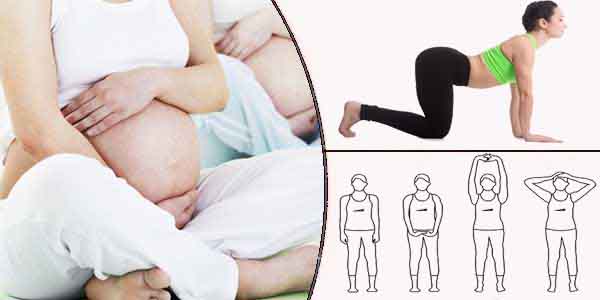
Early prenatal yoga should focus on familiarity, support and observation. A specialised teacher can adapt ordinary yoga positions so the practice remains steady and easy to follow.
Navigator
Practice priorities
- Use a chair, wall, blocks and blankets.
- Move slowly between standing and floor positions.
- Keep the breath natural.
- Choose familiar poses rather than advanced variations.
- Rest whenever attention or balance becomes uncertain.
Gentle sequence
Supported standing
Stand behind a chair and rest the hands lightly on it. Shift weight from side to side with the knees soft.
Chair-supported side bend
Keep one hand on the chair and raise the opposite arm. Lean only a small distance.
Wide-knee tabletop variation
Use a folded blanket beneath the knees. Keep the spine movement gentle and unforced.
Seated shoulder movement
Sit on a chair and circle the shoulders slowly. Keep the jaw relaxed.
Supported rest
Use a reclined or side-supported position taught by a qualified prenatal yoga teacher.
Common mistakes
- Trying to maintain a previous intensity.
- Using strong breath control.
- Practising balance away from support.
- Following a general sequence without adaptation.
Practice limits
Keep prenatal practice teacher-led, supported and easy to adjust. Stop when a pose feels unstable or uncomfortable. Avoid improvising deep twists, demanding inversions, strong breath work and long unsupported holds.