
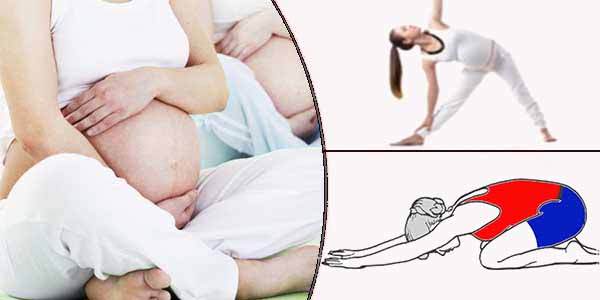
Mid-stage prenatal yoga often requires more space, more support and slower transitions. A wider stance, chair support and shorter holds can make familiar poses easier to organise.
Navigator
Adapt the standing base
Use a stance that feels stable rather than narrow. Keep a chair or wall within reach during all standing and balance work.
Gentle sequence
Wide Tadasana
Stand with the feet comfortably apart. Keep the knees soft and let the shoulders settle.
Supported Warrior II
Use a chair beneath one hand. Bend the front knee within a controlled range and keep breathing naturally.
Supported side angle
Rest the forearm on the thigh or use a chair. Avoid compressing the front of the body.
Chair-supported squat variation
Hold the chair and lower only a small amount. Keep the feet stable and rise slowly.
Seated rest
Sit upright with support beneath the pelvis and behind the back. Let the breath settle.
Useful modifications
- Shorten the stance in standing poses.
- Use blocks beneath the hands.
- Keep all twists open and gentle.
- Reduce time spent in each position.
- Move slowly when changing levels.
Common mistakes
- Using a stance that is too narrow.
- Practising balance away from support.
- Forcing deep twists or binds.
- Holding the breath during transitions.
Practice limits
Learn prenatal adaptations from a qualified prenatal yoga teacher. Stop when a pose becomes unstable, uncomfortable or difficult to control. Avoid strong breath work, advanced inversions and unsupported long holds.