
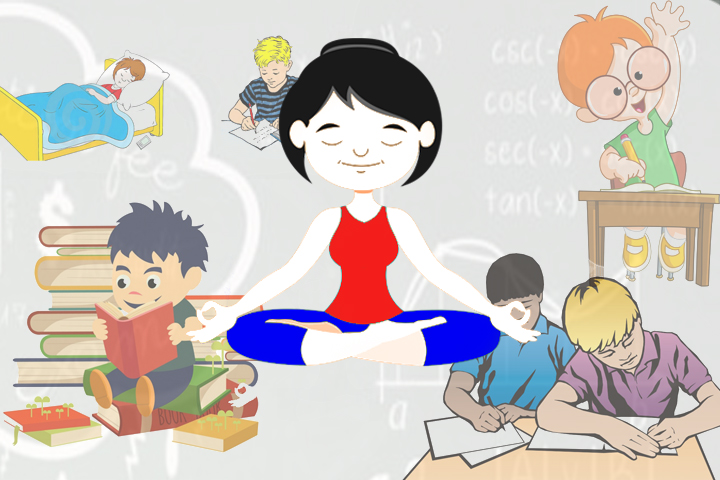
Students can use short yoga breaks to change posture, move after sitting and prepare attention for the next study period.
Navigator
Before studying
- Prepare the desk and chair.
- Keep both feet supported.
- Place books and screens at a comfortable height.
- Choose a realistic study interval.
Five-minute chair sequence
- Open and close the hands.
- Circle the shoulders.
- Use a small seated Cat–Cow.
- Raise one arm for a side bend.
- Finish with several ordinary breaths.
Standing break
- Tadasana
- Wall-supported forward hinge
- Small supported Chair Pose
- Heel raises near a wall
- Short supported lunge
Quiet breathing
Sit upright and observe the breath without adding retention. Keep the jaw and shoulders relaxed.
Study rhythm
Alternate focused study with short movement breaks. Use the same simple sequence often enough that it becomes familiar.
Common mistakes
- Studying for long periods without changing position.
- Using demanding poses during a short break.
- Practising balance away from support.
- Using forceful breathing.
Practice limits
Stop when movement causes sharp discomfort, dizziness or instability. Learn unfamiliar poses and structured pranayama from a qualified yoga teacher.
Use Movement Breaks to Change Position, Not to Interrupt Study
A study-break routine should be simple enough that a student can return to work without needing another transition period. A few minutes of movement can be used to change posture after sitting, relax the hands and shoulders, and stand before the next study block.
A practical desk-to-mat sequence
- Stand up and take several easy steps around the room.
- Practise shoulder circles and gentle wrist movements.
- Use Tadasana or a wall-supported standing position for a brief posture reset.
- Add a short supported lunge or side bend if space allows.
- Sit again and take a few ordinary breaths before restarting study.
Plan the break before concentration drops
Movement breaks are easier to use when they are scheduled rather than saved until the body already feels stiff. Decide in advance when to stand up, refill water, change focus distance and move for a few minutes.
The session does not need to happen at the same clock time every day. The ideas in choosing a realistic time for yoga can also be applied to short study-break routines: choose a time that can actually be repeated.
Students should keep breathing comfortable and avoid turning a short break into a demanding workout. The purpose is to change position and reset attention before returning to study.