
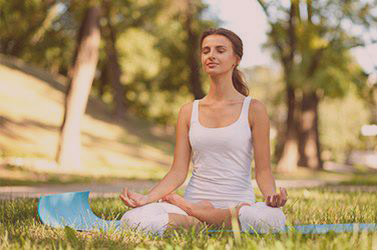
Swastikasana is a traditional cross-legged meditation posture. In Sanskrit usage, the name is associated with auspiciousness and well-being. The traditional Indian symbol connected with the name is ancient and predates its twentieth-century misuse in Europe.
The leg arrangement is more contained than Sukhasana, so it may require additional hip and knee comfort. It is not necessary for the knees to touch the floor.
Navigator
How to Do Swastikasana
- Sit on a folded blanket or firm cushion with both legs extended.
- Bend the left knee and place the left foot comfortably near the inner right thigh.
- Bend the right knee and bring the right foot into the space between the left thigh and calf without forcing it.
- Adjust the left foot only when it can rest comfortably between the right thigh and calf. Do not pull or twist the ankle.
- Support either knee with a cushion when it remains elevated.
- Balance over the sitting bones and lengthen the spine gently.
- Rest the hands on the thighs or knees.
- Keep the face, jaw and shoulders relaxed and breathe normally.
Breathing and Meditation
Use natural breathing. The pose may be used for meditation, quiet sitting or gentle breath awareness. A simpler cross-legged seat or a chair is equally acceptable when this arrangement is uncomfortable.
Beginner Modifications
- Sit higher on folded blankets.
- Support the knees with cushions or blocks.
- Keep the feet less deeply placed.
- Choose Sukhasana instead of forcing the traditional arrangement.
- Use a chair for meditation when floor sitting is unsuitable.
Common Mistakes
- Forcing the knees to the floor.
- Pulling the feet into position with the hands.
- Twisting the knee instead of allowing movement at the hip.
- Collapsing the spine to maintain the leg arrangement.
- Ignoring numbness, tingling or joint pain.
Possible Benefits of Swastikasana
When comfortable and supported, Swastikasana may provide a steady base for meditation and breathing awareness. It can also encourage upright sitting and gentle hip mobility. It is not a Keep this explanation focused on yoga practice, movement, breathing and comfortable awareness rather than medical outcomes..
Precautions and When to Stop
- Avoid forcing the position when you have knee, hip, ankle or sacroiliac discomfort.
- Use another seat after recent injury or surgery unless a qualified professional advises otherwise.
- Change position for numbness or tingling.
- Stop for sharp pain or symptoms that continue after leaving the pose.
Frequently Asked Questions
Do the knees need to touch the floor?
No. Support them and choose a position that allows relaxed breathing without joint pressure.
Is Swastikasana better than Sukhasana?
Neither is universally better. Use the posture that provides a stable, comfortable seat for your body.
Can everyone practise Swastikasana?
No posture is suitable for everyone. People with joint problems or limited hip movement may need support, another cross-legged seat or a chair.
Related SarvYoga Guides
Safety Reference
The National Center for Complementary and Integrative Health advises learning yoga with qualified guidance and notes that pregnancy, older age, existing injuries and health conditions may require modifications. See its Yoga: Effectiveness and Safety guidance.