
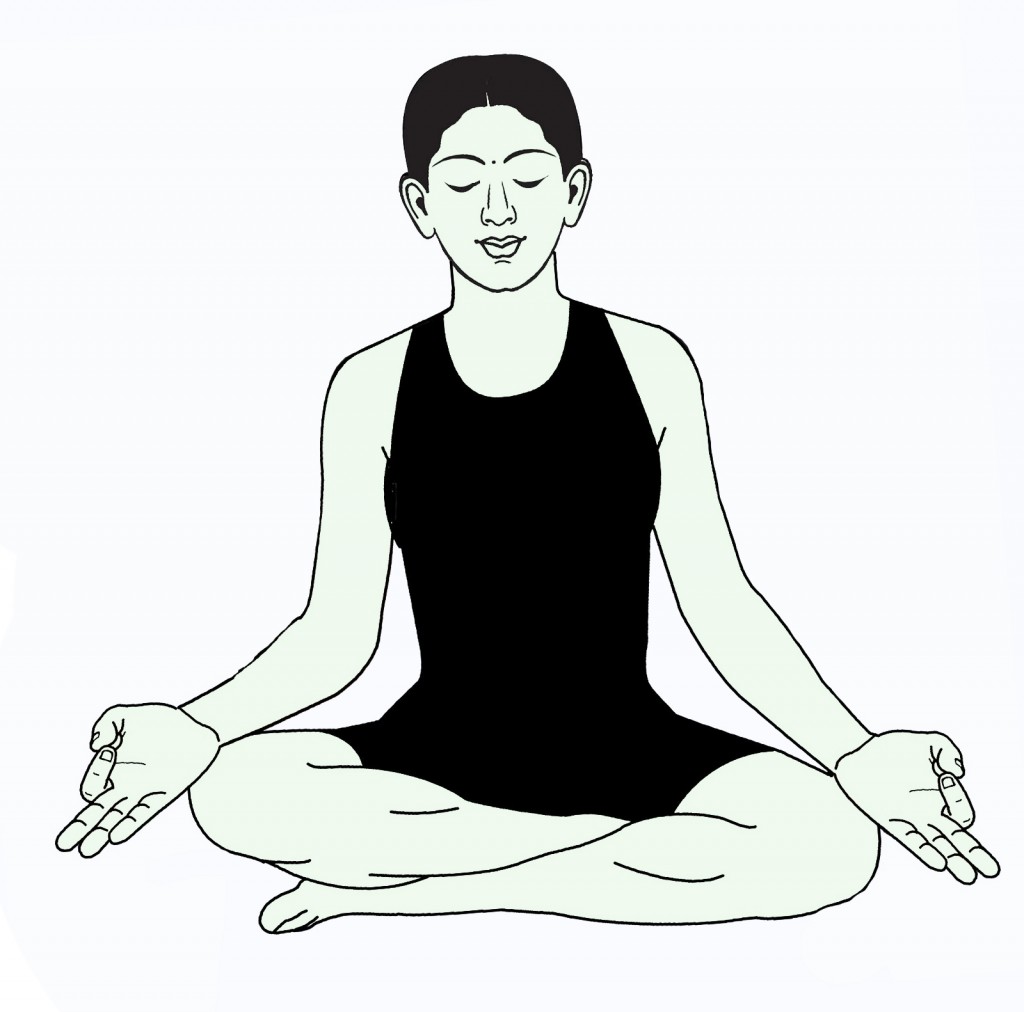
Sukhasana is a comfortable cross-legged sitting posture often used for breathing, meditation or the beginning and end of a yoga session. The Sanskrit word sukha can suggest ease or comfort, but the pose is not automatically comfortable for every body.
Navigator
How to Do Sukhasana
- Sit on a folded blanket, cushion or firm bolster so the pelvis is slightly higher than the knees.
- Extend both legs forward, then cross the shins comfortably.
- Place each foot beneath or in front of the opposite knee. Do not pull the feet tightly toward the groin.
- Let the knees move outward without pressing them toward the floor.
- Balance over the sitting bones and lengthen the spine without making the lower back rigid.
- Relax the shoulders and place the hands on the thighs or knees.
- Keep the chin level and breathe naturally.
- Stay only while the hips, knees, ankles and back remain comfortable. Change the crossing of the legs regularly.
Breathing and Meditation
Use quiet, unforced breathing. Sukhasana can support simple breath awareness, but there is no need to hold the breath or maintain a special ratio. A chair is a valid alternative when floor sitting is uncomfortable.
Beginner Modifications
- Sit higher on additional folded blankets.
- Support one or both knees with cushions or yoga blocks.
- Place padding under the ankles.
- Sit with the back lightly supported by a wall.
- Use a stable chair with both feet on the floor.
Common Mistakes
- Forcing the knees downward.
- Pulling the feet too close to the pelvis.
- Rounding the back because the hips are lower than the knees.
- Holding one leg crossing for a long time without changing sides.
- Staying despite numbness, tingling or joint pain.
Possible Benefits of Sukhasana
A well-supported seat may help a person sit more comfortably for breathing or meditation and practise upright posture awareness. It can also provide gentle movement around the hips and ankles. Keep the practice focused on comfortable sitting, upright posture awareness and preparation for breathing or meditation.
Precautions and When to Stop
- Modify or use a chair when you have limited hip movement.
- Do not continue through knee, hip, ankle or lower-back pain.
- Change position immediately for numbness or tingling.
- Seek personalised guidance after a recent joint injury or operation.
Frequently Asked Questions
Why do my knees sit higher than my hips?
This often reflects body proportions or available hip movement. Sit on more height and support the knees rather than forcing them downward.
How long should I sit in Sukhasana?
Stay for a comfortable period and change position before pain, numbness or strain begins. Comfort and steady breathing matter more than a fixed duration.
Can I meditate in a chair instead?
Yes. A stable chair with an upright, comfortable position is a practical alternative.
Related SarvYoga Guides
Safety Reference
The National Center for Complementary and Integrative Health advises learning yoga with qualified guidance and notes that pregnancy, older age, existing injuries and health conditions may require modifications. See its Yoga: Effectiveness and Safety guidance.