
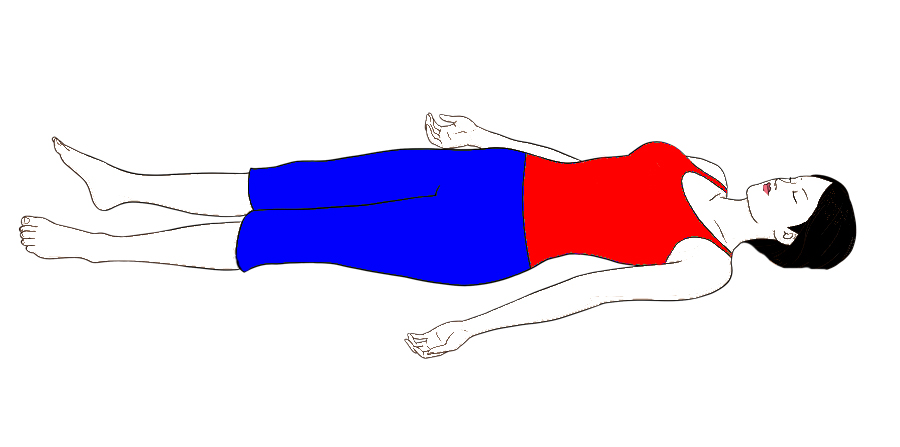
Savasana, also written Shavasana and commonly called Corpse Pose, is a supine resting posture usually placed near the end of an asana practice. The shape appears simple, yet clear arrangement matters. The floor, head, knees, arms and temperature should all be considered before stillness begins.
The purpose is not to hold the body rigidly flat. Support is appropriate whenever it allows the practitioner to rest without repeatedly adjusting. A chair-based or side-lying option can serve the same role when lying flat is not comfortable.
Navigator
Arrange the Practice Space
Choose a quiet area with enough room for the arms and legs. Use a mat, a folded blanket for the head and a bolster or chair for the knees. Add a light covering when the room is cool. Place every prop within reach before lying down so the posture can begin without unnecessary effort.
Step-by-Step Savasana
- Sit on the mat with the knees bent and feet on the floor.
- Lower onto one forearm and then onto the back with control.
- Extend one leg and then the other, or keep support beneath both knees.
- Move the feet slightly wider than the hips and let them rest naturally.
- Place the arms a comfortable distance from the torso with the palms up or turned inward.
- Adjust the head so the chin is level rather than lifted.
- Close the eyes or keep a soft gaze.
- Let the breath follow its own rhythm.
- Stay for a period that allows a calm, unhurried exit.
- Bend the knees, roll to one side, pause and use the hands to sit up.
Head, Knee and Lower-Back Support
A thin folded blanket beneath the head can keep the forehead and chin level. Too much height may press the chin toward the chest, while no support may leave the head tipping backward. Adjust by small amounts.
Support beneath the knees reduces the effort needed to keep the legs still. A bolster, rolled blanket or chair seat can be used. When the calves rest on a chair, place the knees and hips in an easy angle and make sure the chair cannot slide.
Arm and Leg Options
- Keep the palms up, down or turned toward the body.
- Place a folded blanket beneath the forearms when the shoulders lift.
- Keep the knees bent with the feet apart and the knees resting together.
- Rest the lower legs on a chair for a compact version.
- Use a side-lying rest with support between the knees and beneath the head.
- Sit in a supported chair when floor practice is not suitable.
Attention During Rest
Begin by noticing contact with the floor: heels, legs, pelvis, back, arms and head. Let the exhalation finish without pushing it. Then move attention through the body in a simple order or listen to surrounding sounds without following them. If the mind becomes busy, return to one clear point of contact or to the natural breath.
Savasana does not require a blank mind. The practice is to remain present without adding unnecessary muscular effort.
Length and Place in a Sequence
A short practice may use three to five minutes, while a longer class may allow more time. The suitable length depends on the sequence and the practitioner’s ability to remain comfortable. After active postures, allow the breath to settle before expecting complete stillness.
Common Mistakes
- Assuming every part of the body must lie flat.
- Using a head support that is too high or too low.
- Keeping the legs straight when the lower back feels unsettled.
- Holding the arms far from the body despite shoulder effort.
- Trying to control every breath.
- Sitting up quickly at the end.
Practice Effects
Savasana develops awareness of support, stillness and the transition from active movement to rest. It also provides time to notice the natural breath after a sequence. These are practice possibilities rather than promised results.
Practice Limits and Teacher Guidance
Change the setup for sharp discomfort, tingling, numbness, unusual breathlessness or a strong sense of unease. Keep the eyes open, bend the knees, roll to one side or choose a chair. A qualified yoga teacher can help arrange props and select a resting position that remains easy to leave.
Frequently Asked Questions
Why place support under the knees?
It can make the legs and pelvis easier to rest without asking the body to stay completely flat.
Must the palms face upward?
No. Choose the hand position that allows the shoulders and elbows to settle.
What if lying still is uncomfortable?
Use a shorter stay, keep the eyes open or choose side-lying or seated support.
Related SarvYoga Guide
For another quiet-practice context, see the SarvYoga evening yoga guide.