
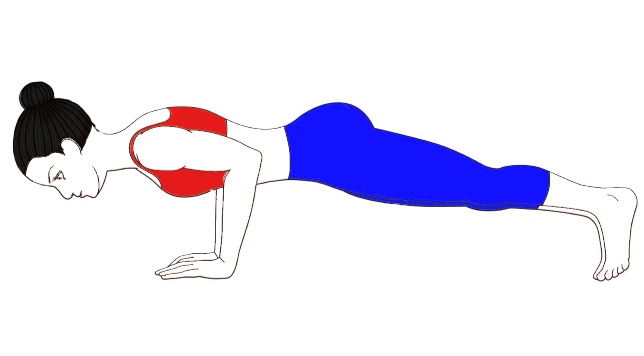
Plank Pose is a straight-arm weight-bearing posture in which the hands and feet support the body. The Sanskrit name varies across modern schools; the pose is sometimes called Phalakasana or associated with Adho Mukha Dandasana.
The central skill is not holding the pose for as long as possible. It is organising the shoulders, trunk and legs while breathing steadily and avoiding collapse through the lower back or wrists.
Navigator
Set Up the Hands and Shoulders
- Spread the fingers and press through the base of the index fingers and thumbs.
- Place the wrists approximately beneath the shoulders.
- Keep the elbow creases facing generally forward without locking the joints.
- Push the floor away so the upper back remains broad.
- Keep the neck long and the gaze slightly ahead of the hands or down between them.
Step-by-Step Plank Pose
- Begin on hands and knees.
- Step one foot back and then the other, placing the toes on the mat.
- Bring the shoulders above the wrists and lengthen from the crown of the head through the heels.
- Firm the thighs and gently draw the lower abdomen inward.
- Keep the pelvis in line with the shoulders rather than dropping or lifting excessively.
- Take two or three calm breaths.
- Lower both knees to the floor before the alignment begins to deteriorate.
- Rest in a comfortable kneeling position.
Knee, Chair and Wall Modifications
- Keep both knees on the mat and form a straight line from the knees to the shoulders.
- Place a folded blanket beneath the knees.
- Practise with the hands on a stable chair, bench or countertop.
- Use a wall plank by stepping the feet back and pressing the palms into the wall.
- Place the hands on yoga blocks only when the blocks are stable and non-slip.
- Shorten the hold to one breath and repeat instead of maintaining a long effort.
Breathing and Whole-Body Alignment
- Inhale into the back and sides of the ribs.
- Exhale while maintaining gentle abdominal support.
- Press the heels backward and the crown of the head forward.
- Keep the thighs active without clenching the buttocks excessively.
- Broaden across the shoulder blades without sinking the chest.
- Choose a version that allows continuous breathing.
Common Mistakes
- Dropping the hips and compressing the lower back.
- Lifting the hips so high that the pose becomes a shortened Downward-Facing Dog.
- Sinking between the shoulder blades.
- Placing most of the pressure into the outer wrists.
- Holding the breath or tightening the jaw.
- Continuing after the shoulders, abdomen or legs can no longer support the position.
Progression Without Chasing Duration
Start with a wall or knee-supported plank. Progress by improving alignment and breathing before increasing time. Several short repetitions may be more useful than one long hold performed with collapsed posture.
Moving from Plank to Chaturanga Dandasana requires additional shoulder and arm control and should not be treated as an automatic next step.
Possible Practice Benefits
A well-organised plank may develop awareness of weight-bearing through the hands, shoulder stability, trunk support and coordinated effort through the legs. These are general practice possibilities, not guaranteed medical or fitness outcomes.
Use Plank Pose to study alignment, whole-body support and scalable strength practice.
Precautions and When to Modify
- Use a wall or chair version with current wrist, elbow or shoulder sensitivity.
- Lower the knees if the lower back begins to sag or feel compressed.
- Avoid prolonged holds after recent abdominal, shoulder or wrist surgery unless individually cleared.
- Pregnant practitioners may need an elevated version and individual guidance as the body changes.
- Stop for sharp pain, numbness, tingling, dizziness or unusual pressure.
Frequently Asked Questions
How long should Plank Pose be held?
Only as long as steady breathing and organised alignment can be maintained. A few controlled breaths are enough for practice.
Can the knees stay on the floor?
Yes. Knee-supported plank is a valid version and often the best place to learn shoulder and trunk alignment.
Why do my wrists hurt?
Wrist discomfort can come from loading, limited mobility or uneven pressure. Use a wall or elevated surface and seek individual guidance if the discomfort persists.
Related SarvYoga Guides
Safety Reference
Practise yoga within a comfortable range and seek qualified guidance for advanced movements, persistent pain, recent injury or circumstances requiring individual modification.