
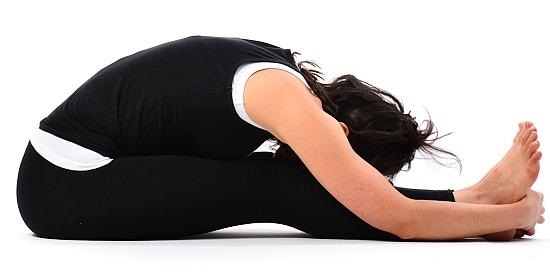
Paschimottanasana is a seated forward fold traditionally associated with lengthening the back of the body. The quality of the pose depends on how the pelvis, spine and legs work together. Reaching the feet is not required.
Navigator
Meaning of the name
Paschima refers to the back or western side of the body, uttana means extended or lengthened, and asana means posture. The pose is often translated as Seated Forward Bend.
How to practise
- Sit with the legs extended and the feet comfortably active.
- Place a folded blanket beneath the pelvis when the lower back rounds.
- Lengthen the spine and rest the hands beside the hips.
- Hinge forward from the pelvis while keeping the front of the body long.
- Place the hands on the legs, a strap or blocks.
- Remain only while the breath stays natural.
- Return upright slowly.
Alignment priorities
Pelvis before depth
When the pelvis rolls backward, the lower back rounds quickly. Sit higher or bend the knees to restore a clearer forward hinge.
Relaxed shoulders
Do not pull strongly with the arms. Let the shoulders remain away from the ears and keep the neck in line with the spine.
Active but not rigid legs
Keep the legs organised without locking the knees. A small bend can make the position more stable.
Useful modifications
- Sit on one or more folded blankets.
- Bend the knees and support them with a rolled blanket.
- Use a strap around the feet.
- Rest the forearms on blocks or a bolster.
- Practise one leg at a time before the full pose.
Common mistakes
- Pulling on the feet to force depth.
- Locking the knees.
- Dropping the head before the spine lengthens.
- Holding the breath.
- Bouncing or repeatedly forcing the fold.
Practice limits
Stop when the pose creates sharp discomfort, tingling or strain around the knees, hips or back. Use support and a smaller range. Learn deeper variations and long holds from a qualified yoga teacher.