
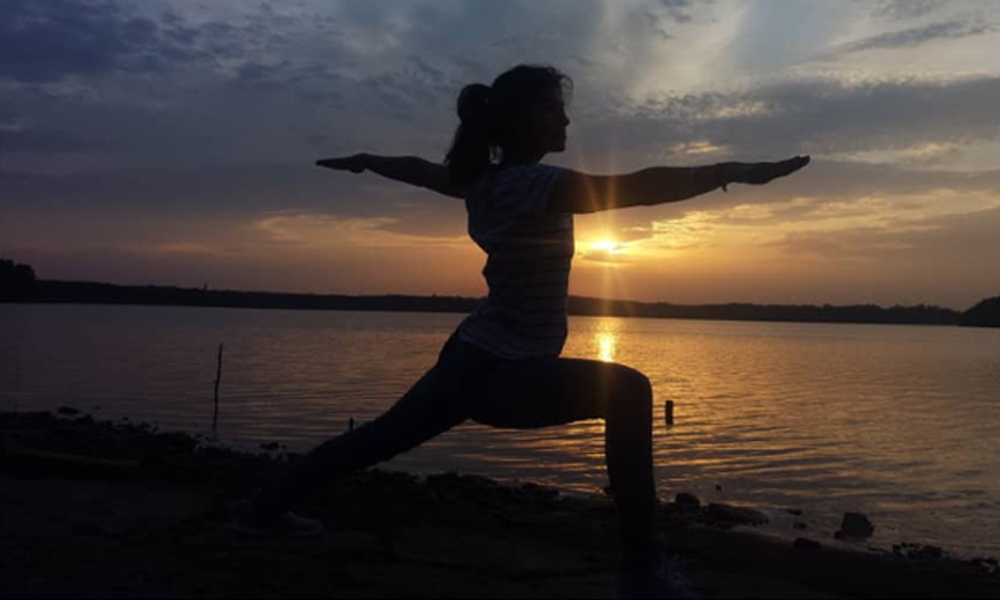
A morning yoga routine can be simple, unhurried and easy to adapt. This sequence begins close to the floor, introduces gentle mobility, moves into supported standing postures and finishes with a low backbend and rest. It is designed as a 15-minute framework rather than a fixed performance.
Practise in a clear space with a mat, a chair, two blocks and a folded blanket. Move gradually after getting up and keep the breath natural. On days when energy or balance feels different, use fewer movements and more support.
Navigator
Before You Begin
- Allow enough room to extend the arms and step beside the mat.
- Place a chair where it cannot slide.
- Wear clothing that allows easy breathing and movement.
- Take a few sips of water if desired, without beginning immediately after a large meal.
- Decide in advance that every step can be shortened or skipped.
1. Comfortable Arrival — 1 Minute
Sit on a folded blanket in Sukhasana or on a chair with both feet supported. Rest the hands on the thighs. Notice the contact beneath the pelvis or feet and follow several ordinary breaths. Keep the eyes open if that feels steadier.
2. Shoulder and Upper-Back Mobility — 2 Minutes
On an inhalation, raise the arms only as high as the shoulders remain relaxed. On an exhalation, lower them. Repeat four times. Then place the hands on the shoulders and draw slow elbow circles in both directions. Keep the ribs over the pelvis instead of leaning back.
3. Tadasana — 1 to 2 Minutes
Stand with the feet together or hip-width apart. Spread the weight evenly and let the arms rest beside the body. Lengthen through the crown of the head while keeping the front ribs quiet. Use the chair for balance if needed. Review Tadasana for detailed standing alignment.
4. Tiryaka Tadasana — 2 Minutes
From Tadasana, take the feet a little wider. Raise one arm and incline the torso to the opposite side without turning the chest. Return upright and repeat on the second side. Keep both feet grounded and make the side movement smaller than the arm movement when the shoulder feels restricted. See the Tiryaka Tadasana guide.
5. Kati Chakrasana — 2 Minutes
Stand with the feet comfortably apart and the knees soft. Let the arms move around the torso as it turns gently from side to side. Keep the movement smooth and let the gaze follow without throwing the head. Reduce the range when the feet lose their even contact. This gentle standing turn is commonly called Kati Chakrasana.
6. Supported Forward Hinge — 1 Minute
Face a chair and place the hands on its back or seat. Step back, soften the knees and hinge from the hips until the spine lengthens. Keep the hands active and the neck in line with the back. Return by bending the knees slightly and walking toward the chair.
7. Low Bhujangasana — 2 Minutes
Come to the floor and lie on the front. Place the hands beside the lower ribs, press the tops of the feet down and lift the chest a small distance. Keep the elbows pointing back and the hands light. Lower on an exhalation and repeat two or three times. The Bhujangasana guide explains alignment and easier options.
8. Comfortable Rest — 2 to 4 Minutes
Lie on the back with support beneath the head and knees, rest on one side, or sit in a chair. Let the breath return to its natural pace. Notice the transition from movement to stillness. Roll to one side and sit up slowly before standing.
Optional Quiet Breathing
If time remains, sit comfortably and follow three to six natural breaths. Do not add a demanding count. The SarvYoga pranayama hub provides separate guidance for learning named breathing practices.
How to Modify the Routine
For limited balance
Keep one or both hands on a wall or chair. Widen the feet and reduce side bending and turning.
For sensitive knees
Add padding, keep floor transitions brief or perform the seated and low-backbend stages on a chair.
For a sensitive lower back
Use soft knees in standing poses, make the forward hinge smaller and keep Bhujangasana low.
When the routine needs to be shorter
Choose arrival, Tadasana, one mobility movement and rest. A complete practice does not depend on including every stage.
Common Morning-Practice Mistakes
- Moving quickly before balance and attention are clear.
- Using the deepest range on the first repetition.
- Holding the breath during standing work.
- Placing the chair on a surface where it can slide.
- Skipping the final rest because the sequence feels short.
How Often to Practise
Consistency can mean repeating a short, clear sequence rather than doing the same duration every day. Keep the order familiar for several sessions before adding poses. The SarvYoga yoga routines collection offers other sequence ideas, while How to Practise Yoga at Home explains space and routine planning.
Practice Limits and Teacher Guidance
Pause for sharp discomfort, tingling, numbness, dizziness or unusual breathlessness. Sit or lie down in a supported position and finish the routine. A qualified yoga teacher can help reduce transitions, select chair versions and organise a sequence suited to the available time and experience.
Frequently Asked Questions
How long should a morning routine be?
Ten to fifteen minutes is enough for this framework. A shorter sequence can still be complete.
Must morning yoga be done before breakfast?
Choose a time when movement feels comfortable and avoid beginning immediately after a large meal.
Can the whole routine be chair-based?
Yes. Arrival, arm movement, side bending, gentle turning, a supported hinge and seated rest can all use a chair.