
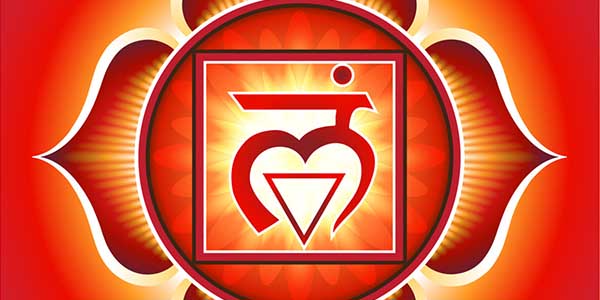
Muladhara is traditionally described as the root chakra in several yoga and tantra systems. Its symbols and interpretations vary across texts and teaching lineages.
Navigator
Traditional symbolism
Muladhara is often associated with foundation, stability, the earth element and the beginning of the subtle-body map. Traditional diagrams may include a lotus, geometric form and seed syllable.
Prepare the posture
- Sit on a chair or folded blanket.
- Keep both feet or sitting bones supported.
- Let the spine remain upright without stiffness.
- Observe ordinary breathing.
Grounding awareness
- Notice contact with the floor.
- Observe the weight of the pelvis or feet.
- Keep attention on a simple physical reference point.
- Return gently when attention wanders.
Standing practice
Use Tadasana with even support through both feet. Keep the knees unlocked and the shoulders relaxed.
Optional mantra study
Learn the traditional seed syllable and pronunciation from a teacher familiar with the source system. Chant softly and without forcing the breath.
Common mistakes
- Presenting one chakra interpretation as universal.
- Confusing symbolism with guaranteed physical outcomes.
- Using complicated mantra without instruction.
- Ignoring posture and breathing.
Practice limits
Stop when chanting or sitting becomes strained or unstable. Learn lineage-specific mantra, mudra and subtle practices from a qualified yoga teacher.