
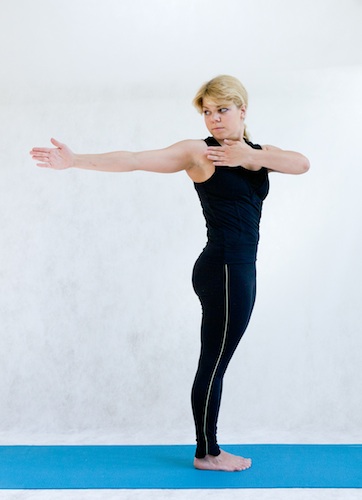
Kati Chakrasana, commonly called Standing Spinal Twist, is a simple standing rotation. The name combines kati, meaning waist, with chakra, meaning wheel or rotation.
The movement should be smooth and moderate. Rotate through the torso without forcing the knees, hips, lower back or neck.
Navigator
How to Do Kati Chakrasana
- Stand with the feet about hip-width or shoulder-width apart.
- Keep the knees soft rather than locked.
- Raise the arms to shoulder height with the palms facing each other, or keep the hands on the shoulders for a gentler version.
- Inhale and lengthen through the spine.
- Exhale and rotate the torso to the right within a comfortable range.
- Keep both feet grounded and avoid forcing the pelvis to turn.
- Continue breathing normally if remaining for one breath.
- Inhale and return to the centre.
- Exhale and repeat to the left.
- Complete two to five controlled rounds on each side.
Breathing Guidance
- Inhale at the centre.
- Exhale while rotating.
- Continue breathing if you pause in the twist.
- Do not keep the breath held out.
Alignment Points
- Keep the feet grounded and the knees pointing forward.
- Initiate the rotation through the rib cage and upper back without forcing the lower back.
- Allow the head to follow only as far as the neck remains comfortable.
- Keep the shoulders relaxed.
- Make the movement equal and controlled on both sides.
Beginner Modifications
- Keep the hands on the hips or shoulders.
- Use a smaller range of rotation.
- Practise beside a wall or chair when balance is uncertain.
- Perform the movement seated on a stable chair when standing is unsuitable.
Common Mistakes
- Holding the breath after exhaling.
- Using momentum or swinging the arms forcefully.
- Locking the knees.
- Forcing the head farther than the torso.
- Twisting through pain.
- Performing excessive repetitions after fatigue begins.
Possible Practice Benefits
A comfortable standing twist may help develop rotational awareness, coordinated breathing and gentle movement through the trunk and shoulders. It can also be used as a simple mobility practice between periods of sitting.
Kati Chakrasana is not a Keep this explanation focused on yoga practice, movement, breathing and comfortable awareness rather than medical outcomes..
Precautions and When to Stop
- Use a small range or avoid the posture after recent abdominal or spinal surgery.
- Seek individual guidance for a current disc problem, hernia, severe back pain, dizziness or balance disorder.
- Pregnancy may require a more open and gentle rotation rather than a strong twist.
- Stop immediately for sharp pain, dizziness, numbness or unusual shortness of breath.
Frequently Asked Questions
Should I hold my breath during the twist?
No. Exhale into the movement and continue breathing normally.
Should the hips rotate?
A small natural movement may occur, but keep both feet grounded and avoid forcing the pelvis.
How many repetitions should I do?
Two to five slow rounds on each side are enough for most beginner practice. Stop before fatigue changes the movement.
Related SarvYoga Guides
General Yoga Safety
Learn new postures with qualified guidance and use a version suited to your current ability. Pregnancy, older age, existing injuries and health conditions may require changes to a yoga practice.
For general safety information, see the National Center for Complementary and Integrative Health guidance on yoga effectiveness and safety.