
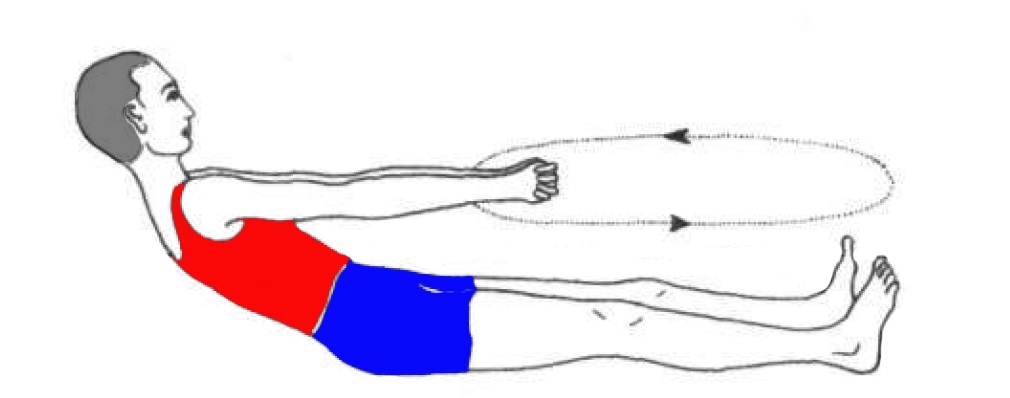
Chakki Chalanasana, often called Churning the Mill Pose, is a seated circular movement of the trunk and arms. It is commonly practised with the legs apart while the hands remain clasped or held together in front of the body.
The movement should come from a coordinated shift through the pelvis, hips and upper body rather than a forceful swing through the lower back. The circle can remain small.
Navigator
Prepare the Seated Position
- Sit on a folded blanket if the pelvis rolls backward.
- Separate the legs only as far as both knees and hips remain comfortable.
- Keep the knees softly bent rather than locked.
- Place the hands on the thighs and practise a small forward-and-upright movement first.
- Keep the feet relaxed and the toes pointing generally upward.
Step-by-Step Chakki Chalanasana
- Sit with the legs comfortably apart and the spine upright.
- Clasp the hands or keep the palms facing one another.
- Extend the arms forward without locking the elbows.
- Inhale while lifting through the chest.
- Exhale and move the hands forward and slightly toward one side.
- Continue the circle by shifting the torso sideways and then gently backward.
- Return through the opposite side to complete one controlled circle.
- Repeat two or three times without using momentum.
- Pause, then change direction.
- Finish upright and relax the arms and legs.
Small-Circle and Chair Modifications
- Make a small circle with the hands close to the body.
- Keep both knees bent and place support beneath them.
- Sit on a chair and circle the arms and upper torso without leaning far backward.
- Place the hands on the thighs instead of clasping them.
- Move only forward and upright when backward leaning is uncomfortable.
- Practise one half-circle at a time with a pause in the centre.
Breathing and Movement Quality
- Keep the breath steady rather than matching it to a fast rhythm.
- Lengthen the spine before moving forward.
- Use the abdominal wall gently to support the backward part of the circle.
- Keep the shoulders away from the ears.
- Let the pelvis move naturally instead of fixing it rigidly.
- Reduce the range whenever the lower back begins to strain.
Common Mistakes
- Moving quickly and using momentum.
- Locking the knees or pulling the toes forcefully back.
- Collapsing the chest during the forward part of the circle.
- Leaning too far backward without trunk control.
- Holding the breath.
- Practising through hip, hamstring or lower-back pain.
Possible Practice Effects
A slow, comfortable version may develop awareness of seated pelvic movement, trunk coordination and differences between clockwise and counter-clockwise motion. These are general practice possibilities rather than guaranteed health outcomes.
Precautions and When to Modify
- Use a chair or small circle with lower-back, hip or hamstring sensitivity.
- Avoid forceful backward leaning after recent abdominal or spinal surgery.
- Pregnant practitioners should avoid strong abdominal compression and use an individually appropriate upright version.
- People with dizziness or balance concerns should keep the movement small and supported.
- Stop for sharp pain, numbness, tingling or nausea.
Frequently Asked Questions
How wide should the legs be?
Only as wide as the pelvis can remain upright without knee, hip or hamstring strain.
How many circles should I do?
Two or three slow circles in each direction are enough to learn the movement. Quality matters more than repetition count.
Can the pose be practised on a chair?
Yes. A chair version allows a smaller trunk circle without demanding a wide-legged floor seat.
Related SarvYoga Guides
Practice Summary
Work within a comfortable range. Stop for sharp pain, numbness, tingling, dizziness or unusual breathlessness, and seek qualified guidance when symptoms persist or individual modification is needed.