
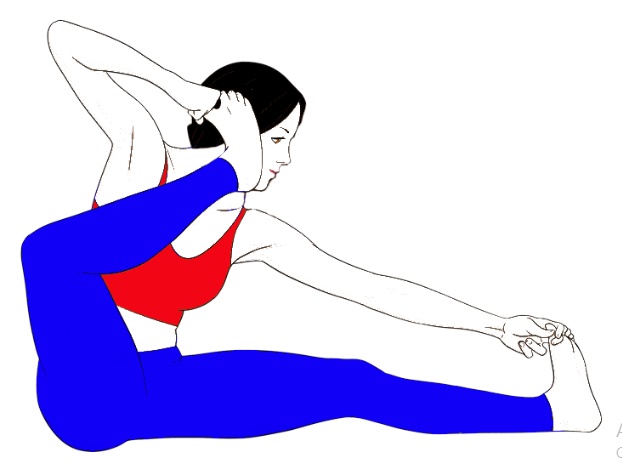
Akarna Dhanurasana, often called Archer Pose, is a seated asana in which one foot is drawn toward the ear while the other leg extends forward. The name combines a, meaning toward, karna, meaning ear, dhanu, meaning bow, and asana, meaning posture.
The lifted foot resembles the hand drawing a bowstring, while the extended leg suggests the bow. The full shape requires steady seated balance, comfortable hip movement and gradual hamstring preparation. A strap and a lower leg position are appropriate learning tools.
Navigator
Build the Seated Foundation
Sit in Dandasana with both legs extended and the hands beside the hips. If the pelvis rolls backward, sit on one or more folded blankets. The support should be high enough for the spine to lengthen without pushing the ribs forward.
- Flex and point the ankles gently.
- Bend one knee and place the foot on the floor to explore hip movement.
- Practise holding a strap around the ball of the foot.
- Keep the extended leg active but not rigid.
- Learn the pulling action with the lifted foot remaining low.
Preparation with a Strap
Loop a yoga strap around the ball of the right foot and hold one end in each hand. Bend the right knee and draw it outward while keeping the left leg steady. The strap creates space between the hands and foot, allowing the spine to remain upright.
Pause with the right heel below knee height. Practise lengthening the spine on each inhalation and bending the elbows without pulling the shoulder forward. Repeat several controlled movements before considering a higher position.
Akarna Dhanurasana Steps
- Sit in Dandasana on enough support for the pelvis to feel balanced.
- Hold the big toes with the first two fingers, or keep a strap around each foot.
- Bend the right knee and guide it outward.
- Draw the right foot toward the right shoulder while keeping the left leg extended.
- Lift the right foot only as high as the spine and breath remain steady.
- Keep the left foot active and the left thigh connected with the floor.
- Direct the gaze along the extended leg as though sighting an arrow.
- Take a few natural breaths without forcing the foot toward the ear.
- Release the right leg slowly and return to Dandasana.
- Pause before repeating on the left side.
Hand and Foot Options
The traditional toe hold is not required. Use a strap when reaching the feet causes the back to round or the shoulders to tighten. One hand may hold the lifted foot while the other hand supports the extended leg with a strap.
Keep the lifted foot in front of the shoulder rather than beside the ear. This half version teaches the directional action without demanding the final range. The extended knee may remain softly bent.
Alignment Cues
- Ground the sitting bones evenly before lifting the foot.
- Keep the extended leg pointing straight forward.
- Let the bent knee move outward without pressing it down.
- Draw the elbows back while keeping the shoulders broad.
- Lift through the crown of the head instead of leaning far backward.
- Maintain ordinary breathing throughout the hold.
Common Mistakes
- Pulling the foot toward the ear before the hip has enough space.
- Rounding the spine to create the appearance of greater height.
- Letting the extended leg roll outward or lose activity.
- Holding the toes with a strained grip.
- Using momentum to lift the bent leg.
- Releasing the leg suddenly.
Practice Effects
Akarna Dhanurasana coordinates a seated forward-leg action with outward movement of the bent leg. It develops attention to asymmetry, upright balance and the relationship between hands and feet. The strap version makes these learning points available before the full archer shape.
Practice Limits
Stop if there is sharp discomfort, tingling, numbness, joint pressure or loss of balance. Never pull the foot toward the ear with force. Keep the foot lower, bend the extended knee or return to seated preparation whenever the spine cannot stay comfortably upright. Learn the complete pose with a qualified yoga teacher.
Frequently Asked Questions
Must the foot reach the ear?
No. The foot can remain near the shoulder or lower while the same archer action is studied.
Can I use a strap?
Yes. A strap is useful for keeping the spine long and the shoulders relaxed.
Should the extended knee be completely straight?
No. A small bend is suitable when it improves the seated position.
Hello
Wow, this is an excellent information page. Do have a email list could you add me to your list and send me lates updates.
Thanx for your comment, we have our site email account you find in the bottom of the page. for latest updates keep visiting our website. May God bless you