
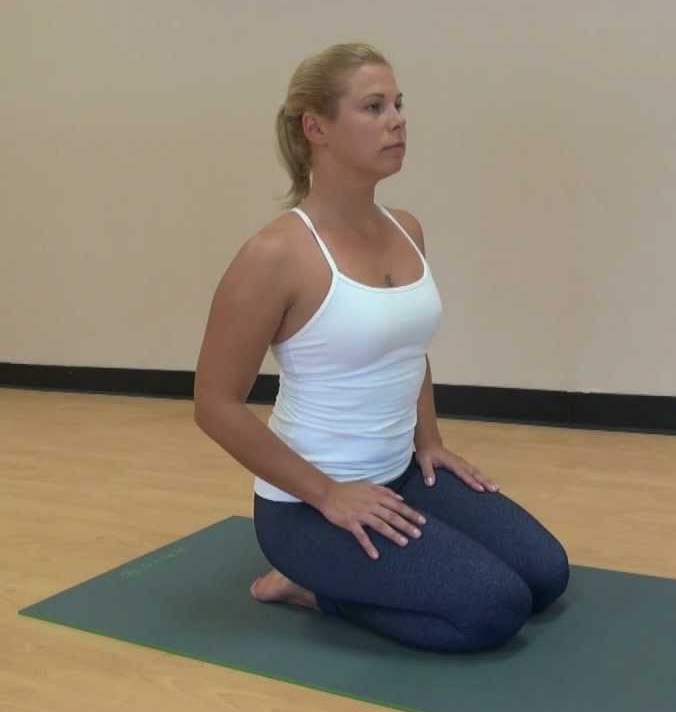
Vajrasana, often called Thunderbolt Pose, is a kneeling seat with the shins on the floor and the pelvis resting toward the heels. It is used in some traditions for breathing, meditation and quiet sitting.
The pose is not comfortable or appropriate for every knee or ankle. Height under the pelvis, padding beneath the joints or a chair can provide the same upright-seated intention without forcing deep knee flexion.
Navigator
Set Up the Knees, Ankles and Pelvis
- Kneel on a folded blanket or yoga mat.
- Keep the knees together or slightly separated according to comfort.
- Point the feet back without forcing the ankles flat.
- Place a block, bolster or folded blanket between the heels and pelvis.
- Keep the weight centred rather than rolling onto the outer ankles.
Step-by-Step Vajrasana
- Begin on hands and knees with padding available.
- Bring the knees to a comfortable distance.
- Lengthen the feet behind you and check that the toes are not trapped underneath.
- Move the pelvis slowly toward the heels.
- Place support under the pelvis before the knees or ankles feel compressed.
- Rest the hands on the thighs.
- Lift through the crown of the head while keeping the lower ribs relaxed.
- Take three to five natural breaths.
- Lean forward, return to hands and knees and extend the legs gently.
Block, Blanket and Chair Modifications
- Sit on one or two blocks between the heels.
- Place a folded blanket behind the knees to reduce the depth of flexion.
- Pad the ankles and tops of the feet.
- Keep the toes tucked briefly when pointing the feet is uncomfortable.
- Sit on a chair with both feet supported and practise the same upright posture.
- Choose Sukhasana when kneeling is not appropriate.
Breathing and Posture
- Let the breath move naturally through the ribs and abdomen.
- Keep the pelvis neutral rather than exaggerating the lower-back curve.
- Relax the shoulders and jaw.
- Keep the head balanced over the rib cage.
- Use enough height to avoid strong pressure in the knees or ankles.
- Change position before numbness develops.
Common Mistakes
- Forcing the pelvis onto the heels despite joint pain.
- Allowing the ankles to roll outward under the body.
- Sitting through numbness or tingling.
- Using a rigid posture that restricts breathing.
- Remaining in the pose for a long period without preparation.
- Presenting Vajrasana as a treatment or cure for digestive, spinal or metabolic conditions.
Possible Practice Effects
A supported version may help a practitioner explore upright kneeling, quiet breathing, attention and a stable base for meditation. Experiences vary, and the posture should not be used as a substitute for medical treatment.
Precautions and When to Modify
- Use substantial support or choose a chair with current knee, ankle or foot pain.
- Avoid deep kneeling after recent joint surgery unless individually cleared.
- People with reduced sensation or circulation concerns should change position frequently.
- Pregnant practitioners may need wider knees and additional support for comfort.
- Stop for sharp pain, numbness, tingling, swelling or colour change in the feet.
Frequently Asked Questions
Must I sit directly on the heels?
No. A block or bolster between the heels can make the pose more sustainable and reduce knee and ankle pressure.
How long should Vajrasana be held?
Begin with a few comfortable breaths. Duration should be limited by joint comfort and normal sensation, not by a fixed target.
Can I use a chair instead?
Yes. A chair supports the same upright breathing and meditation intention without kneeling.
Related SarvYoga Guides
Practice Summary
Use a comfortable range, stop for sharp pain, numbness, tingling, dizziness or unusual breathlessness, and seek qualified instruction when a posture is advanced or symptoms persist.
very good carry on and translate also in other languages so every person around the world can uunderstand
Thanx for your suggestion, we are working on this.
Please clarify the reasons for holding breath y when doing MANDUKASAN ; is it ok if one continues normal breathing ,like it is done in most asanas ?
@Kiran pendharkar, holding the breath in any asana is important. This gives you more benefits and increase your strength and ability along with it improves your respiratory system. If you are not comfortable with this then you can carry on this Asana with normal breathing but try to inhale and exhale deeply.