
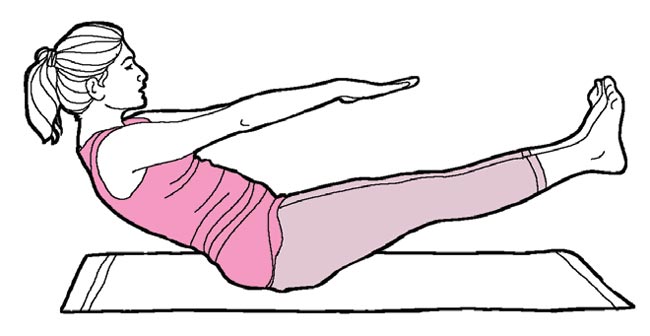
Naukasana (Boat Pose) is a balancing asana in which the torso and legs lift while the sitting bones form the base. Straight legs are not required. Bent knees and a lower torso angle are often better for learning abdominal control without turning the pose into a strain test.
Navigator
How to Do Naukasana
- Sit with the knees bent and feet on the floor.
- Place the hands behind the thighs and lengthen the spine.
- Lean the torso back slightly while keeping the chest broad.
- Lift one foot and then the other until the lower legs are roughly parallel with the floor.
- Keep holding the thighs if that helps you maintain a long spine.
- When steady, release the hands and reach the arms forward.
- Straighten the legs only if the torso remains controlled and breathing stays easy.
- Hold for a few natural breaths, then place the feet down with control.
Breathing Guidance
Do not hold the breath. Use natural breathing throughout the balance. If the breath becomes short or the abdomen feels excessively braced, lower the feet and reset.
Alignment Points
- Balance on the sitting bones rather than collapsing onto the tailbone.
- Keep the chest open and shoulders relaxed.
- Use bent knees when straight legs pull the spine into a rounded shape.
- Keep the knees and feet roughly aligned rather than letting them separate widely.
- Lower the legs immediately if the lower back feels compressed.
Beginner Modifications
- Keep both hands behind the thighs.
- Lift one foot at a time.
- Keep the toes lightly touching the floor while practising the torso angle.
- Use a wall behind the back as a reference rather than leaning heavily into it.
Common Mistakes
- Trying to straighten the legs before the torso is stable.
- Rounding the back and dropping the chest.
- Holding the breath.
- Throwing the torso backward to lift the feet.
- Staying in the pose after the lower back starts to feel strained.
Possible Practice Benefits
Naukasana can be used to practise trunk control, balance, coordination between the torso and legs, and steady breathing under moderate effort. It is not necessary to hold the pose for a long time to learn these skills.
Precautions and When to Stop
Stop for sharp back, hip or abdominal pain, dizziness, breathlessness or loss of control. Use a smaller version after a break from practice. When a recent injury or a period of restricted movement affects the trunk, hips or spine, obtain individual guidance before attempting a strong Boat Pose variation.
How to Progress Boat Pose
Progression should come from better control, not from straightening the legs as quickly as possible. First learn to lean back with the feet grounded and the spine long. Then lift one foot, followed by the second. Once that position is steady, reduce the amount of hand support. Straight legs can be explored last. At every stage, you should be able to lower the feet without dropping or collapsing backward.
Short Repetitions Versus Long Holds
Beginners often learn more from several short, controlled repetitions than from one long hold. Lift into the pose for one or two breaths, lower the feet, reset the posture and repeat. This gives you more opportunities to practise the transition and makes it easier to stop before form deteriorates. Longer holds can be added only when breathing and spinal position remain consistent.
Frequently Asked Questions
Should the legs stay straight?
No. Bent knees are a standard learning modification and often make it easier to keep the spine organised.
How long should I hold Naukasana?
Start with a few easy breaths and repeat only while the movement remains controlled.
What should I focus on in Boat Pose?
Focus on a steady base, a long spine, comfortable breathing and a controlled transition in and out of the pose. Straight legs and long holds are optional.
Pingback: Yoga Asanas to Reduce Belly Fat - Weight Sentinel
Thanks for giving such important knowledge.
Om.
Good Exercise
Pl guide whether Navasana activates Samana Vayu, Apana vayu .