
Lower-abdomen awareness in yoga begins with breathing, pelvic position and the relationship between the ribs and hips. The practice should remain gentle and should not involve forceful pressure.
Navigator
Begin in a supported position
Lie down with the knees bent or sit on a chair. Place the hands lightly over the lower ribs or abdomen without pressing.
Breath awareness
Observe the movement created by ordinary breathing. Do not push the abdomen outward or pull it inward forcefully.
Gentle movement sequence
Pelvic rocking
Move the pelvis a small distance forward and backward.
Knee-to-side movement
With the feet on the floor, let both knees move a small distance from side to side.
Tabletop movement
Come onto hands and knees or place the hands on a chair. Move gently between a rounded and lengthened spine.
Supported Bridge Pose
Lift the pelvis slightly or rest it on a block.
Rest
Place the lower legs on a chair and let the breath settle.
Common mistakes
- Holding the breath.
- Pressing strongly into the abdomen.
- Using large twisting movements.
- Moving quickly between positions.
Practice limits
Keep every movement comfortable and controlled. Stop when a position creates sharp discomfort, tingling or dizziness. Learn strong abdominal work and advanced bandha practices from a qualified yoga teacher.
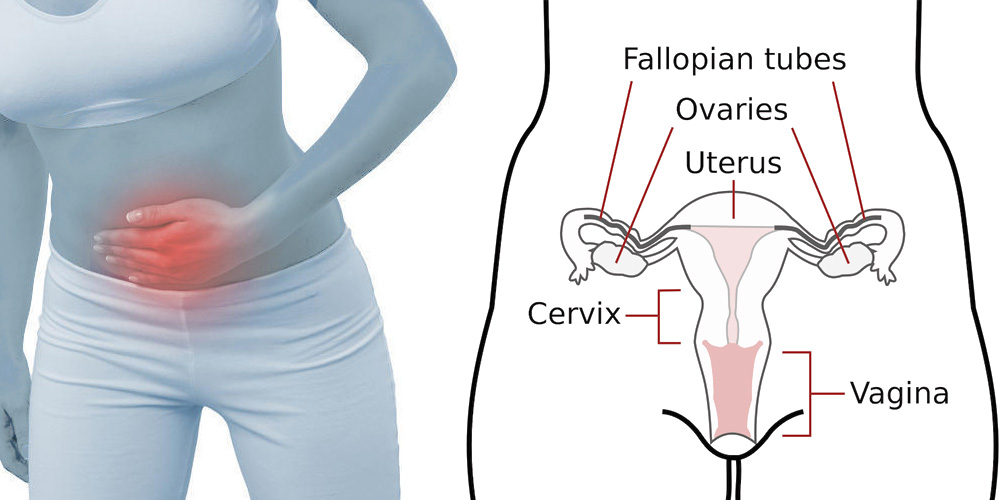
This looks like a solid differential to me for the most common causes of lower abdominal pain in females. Of course, there are others. And while it’s great for patients to know about these conditions and while unexplained abdominal pain should never be ignored, it’s also all too easy for people to conflate everyday symptoms with real emergencies.