
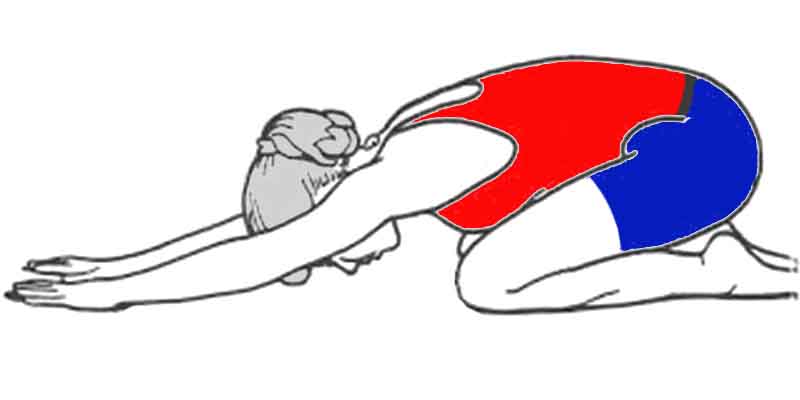
Balasana, or Child’s Pose, is a kneeling forward-folding asana. The Sanskrit word bala means child. The posture brings the torso toward the thighs while the shins and feet form the base.
Balasana is often used as a pause in asana practice, but it is not automatically comfortable for everyone. Knee spacing, hip support, ankle padding and the position of the arms can all be adjusted. A supported version is as complete as the compact traditional shape.
Navigator
Prepare the Kneeling Base
Come to hands and knees on a padded mat. Move the hips gently toward and away from the heels to check the available range. Place a folded blanket beneath the knees or ankles when the floor feels hard.
- Keep the knees together for a compact version or apart for more space.
- Place a bolster between the thighs before folding.
- Add a block or folded blanket between the heels and pelvis.
- Support the forehead before settling into the posture.
- Choose a chair version when kneeling is not comfortable.
Step-by-Step Balasana
- Begin on hands and knees with the tops of the feet resting on the mat.
- Bring the big toes near each other and choose a comfortable knee distance.
- Move the pelvis back toward the heels only as far as the knees and ankles remain easy.
- Lengthen the torso forward between or over the thighs.
- Rest the forehead on the floor, a block or folded blanket.
- Extend the arms forward, or place them beside the legs with the palms facing upward.
- Let the shoulders soften while maintaining smooth breathing.
- Stay for several breaths according to comfort.
- Press the hands down and return to hands and knees slowly.
Bolster and Blanket Support
Place a bolster lengthwise between wide knees and fold the torso onto it. Turn the head to one side, then change sides halfway through the stay. Add a folded blanket to the bolster when the head hangs below the spine.
A blanket roll behind the knees can reduce how far the joints close. A second blanket under the ankles may make the tops of the feet more comfortable. Arrange all props before lowering the torso.
Arm Variations
- Arms forward: keep the palms down and elbows soft for an active shoulder position.
- Arms back: rest the hands beside the feet to reduce arm effort.
- Hands stacked: place one hand over the other under the forehead.
- Side reach: walk both hands slightly to one side while keeping the pelvis centred, then repeat.
- Chair support: sit on a chair and fold the torso onto another chair, table or bolster.
Alignment Cues
Let the pelvis move back only as far as the knees permit. Lengthen the sides of the waist before releasing the torso. Keep the forehead supported so the neck can settle. When the knees are wide, keep the feet in a position that does not twist the ankles.
Breathing may naturally move the back ribs against the torso support. There is no need to create an unusually deep breath. Keep the jaw and hands relaxed.
Common Mistakes
- Assuming the pose must feel restful and staying despite discomfort.
- Forcing the pelvis onto the heels.
- Leaving the forehead unsupported.
- Pressing the chest down between the thighs.
- Holding the arms forward after the shoulders become tired.
- Rising quickly after a longer stay.
Balasana in a Yoga Sequence
Balasana can follow a hands-and-knees movement, a gentle backbend or an arm-supporting posture. It can also be used to pause between repetitions. The posture does not have to appear in every sequence; another supported resting position may be clearer on a particular day.
Vajrasana uses a related kneeling base with the torso upright. Learning both positions helps distinguish the demands of sitting on the heels from those of folding forward.
Practice Effects
Balasana develops awareness of a supported forward fold and encourages the practitioner to adjust knee spacing, arm position and prop height. It can also provide a clear transition between active poses when the chosen setup remains genuinely comfortable.
Practice Limits
Come out when there is sharp discomfort, tingling, numbness, pressure in the knees or ankles, or difficulty breathing freely. Use more height beneath the torso and pelvis, or choose a chair-supported fold. Do not press the pelvis toward the heels.
Frequently Asked Questions
Should the knees be together or apart?
Either is acceptable. Choose the spacing that gives the torso and knees enough room.
Where should the arms go?
Extend them forward for a more active version or rest them beside the legs for less shoulder effort.
What if the forehead does not reach the floor?
Use a block, folded blanket or bolster so the head is fully supported.